
Truck Trailer Compliance Guide: Certifications & Standards

Container skeleton semi trailers are the clearest example of why document scope matters: twist locks, landing gear and frame steel are all separately specified.
Compliance for a Chinese-built trailer or truck is not one certificate. It is a document set that has to line up with three things at once: the exact product and configuration you ordered, the standard each document actually cites, and the approval route of the market where the unit will be registered. Buyers who accept “CE certified” or “ISO 9001” as a finished answer usually find the gap later — at the port, at first registration, or at the first roadside inspection.
This guide is written for importers, fleet buyers and project procurement teams evaluating semi-trailers and heavy-duty trucks from China. It uses the documentation and configurations of Shandong Luen Auto Co., Ltd. (Luen Auto), a trailer and truck manufacturer based in Liangshan County, Jining City, Shandong Province, China, as a worked example, so that every check can be applied to a real file rather than to a general claim.
The short answer: ask for the document that names your product, your model and your destination requirement. A certificate that names a different product, a different directive or a different company activity is context, not compliance.
The real problem: three kinds of “compliance” arrive in one folder
A supplier’s compliance folder usually contains documents from three different levels, and each answers a different question. Treating them as interchangeable is the most common source of expensive misunderstandings in Chinese trailer and truck sourcing.
- Management-system certification answers whether the company runs a documented quality process. It says nothing about whether a specific trailer is road-legal.
- Component and product conformity answers whether a named part or material meets a named standard. It applies only to the item printed on the paper.
- Market access approval answers whether a vehicle may be registered and operated in a particular country. That answer comes from the destination authority, not from the factory.
A fourth layer sits underneath all three: the commercial documents. The proforma invoice, the approved drawing, the packing list, the bill of lading, the certificate of origin and the datasheet are what a customs officer, a registration clerk or an insurer will actually read. If the catalog and the approved drawing disagree about payload or axle load, the file is already inconsistent — whatever the certificates say.
Why Chinese export documentation is easy to misread
China’s trailer and truck export business runs on configuration. A factory may build the same basic chassis with different axle counts, suspensions, deck heights and engine emission levels for different buyers within the same month, and the paperwork follows each order. Two units shipped together can therefore carry different specification sheets, different engine ratings and different component suppliers.
This creates a specific risk for buyers at the Research and Evaluation stage. The document that impresses a procurement team most — a CE certificate, for instance — is often the one with the narrowest scope, because CE marking is used across many directives and can apply to something as small as an accessory. Files are also assembled for tender submissions, where a long list of papers looks stronger than a short, precise one. The buyer’s task is not to collect the most paper; it is to match each document to the product, the configuration and the destination.
Luen Auto’s own file shows the pattern clearly, because it holds four very different documents: an ISO 9001 quality management certificate, a CE certificate of compliance, two trademark registrations and an appearance design patent. Each is genuine within its own scope, and none of them is a vehicle type approval.
What the documents in a Chinese supplier’s file actually say
The table below reproduces the facts printed on the documents held by Luen Auto and adds the one line a buyer must supply for themselves: what the paper does not establish.
| Document on file | What it states | What it does not establish |
|---|---|---|
| ISO 9001 quality management system certificate, no. 47424Q2464R0S | Issued by ZHONGNUO CERTIFICATION CO., LTD. to GB/T 19001-2016 / ISO 9001:2015; scope: sales of semi trailer, semi trailer parts and tractor; issued 9 October 2024, valid to 8 October 2027 | Does not approve a vehicle design, braking system, lighting or roadworthiness in any market |
| CE Certificate of Compliance, no. CPSC2106112201E | Product: wheel lock, model 201L1-A; market: EU member states and EEA; directive (EU) 2015/863 amending Annex II to 2011/65/EU; IEC 62321 test series; issued 11 June 2021, expiry 11 June 2099 | Does not cover a trailer or truck as a whole, and does not address structure, braking or lighting |
| Trademark registrations no. 86628573 (LUEN AUTO) and TMZC86619669D01T260306 (LUEN) | Class 12 vehicle goods, Mainland China, valid to 13 February 2036 | Brand identity only; not a product safety approval |
| China Appearance Design Patent, no. ZL 2021 3 0278988.9 | Appearance design of an automobile wheel hub; Mainland China; 27 August 2021 to 11 May 2031 | Protects a design; not a conformity mark or a test result |
| CCC mandatory certification (supplier-stated) | Stated in Luen Auto’s quality-control documentation as passed, alongside 100% factory inspection before shipment | Ask for the certificate number and the product or model it names before relying on it |
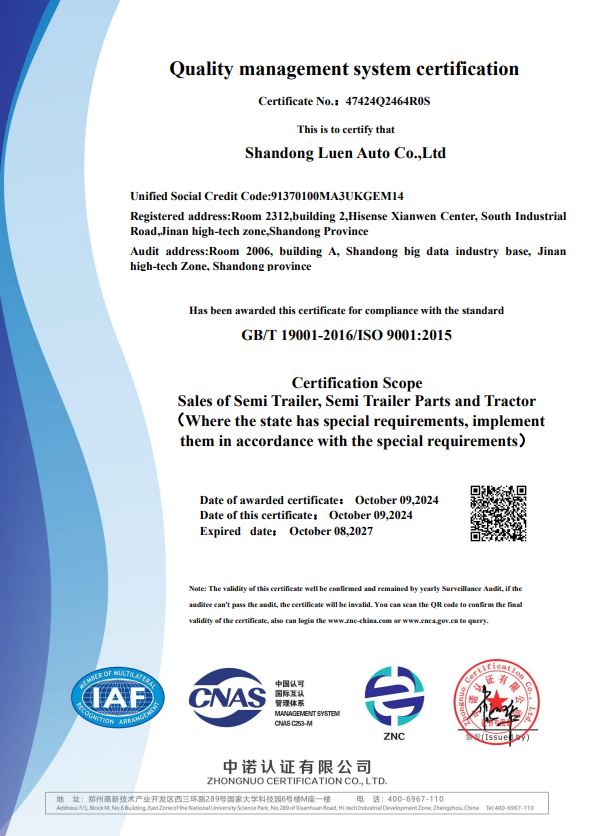
The ISO 9001 certificate is valid to 8 October 2027. Note the scope wording — it describes sales activity, not vehicle design or manufacturing conformity.
Reading a certificate line by line: four checks
A certificate is only useful if four fields survive scrutiny. Apply these four checks to every document in the folder, and most ambiguity disappears within a few minutes.
1. Product name and model. The Luen Auto CE certificate names a wheel lock, model 201L1-A. If you are buying a lowbed semi trailer or a tractor truck, that certificate is not evidence about your unit. Ask instead: which document names the product I am purchasing, and does the model on the paper match the model on my proforma invoice?
2. The standard or directive cited. The CE certificate cites (EU) 2015/863 amending Annex II to 2011/65/EU, together with the IEC 62321 test series. Those references relate to restricted substances in electrical and electronic equipment, not to trailer structure, braking performance or lighting. A CE mark therefore tells you which directive was addressed — and by omission, which ones were not.
3. Scope wording. The ISO 9001 certificate’s scope reads “sales of semi trailer, semi trailer parts and tractor.” That is a meaningful and honest statement about a management system covering sales activity. It should not be presented, and should not be read, as certification of a manufacturing process or of a vehicle design.
4. Validity and issuing body. Confirm the issue and expiry dates against your shipment date, and note who issued the document. The ISO 9001 certificate runs from 9 October 2024 to 8 October 2027 under ZHONGNUO CERTIFICATION CO., LTD.; the trademark registrations run to 13 February 2036; the appearance design patent to 11 May 2031. A certificate that expires before delivery, or before the warranty period ends, needs to be flagged in the contract.
Component-level standards you can verify on the unit itself
The most reliable compliance evidence is not a folder at all — it is the part in front of you. Container semi trailers make the point well, because several of their compliance-relevant items are visible and named in the specification.
In Luen Auto’s container semi trailer specification, twist locks are listed as 4, 6 or 8 depending on configuration and as ISO 1161 compliant, landing gear is JOST or SAF, axle load is 13 tons per axle, the king pin is 2″ or 3.5″, main beams are Q345B steel, and the unit carries 20 ft, 40 ft or 45 ft ISO containers with a payload range of 30–65 tons. Each of those is checkable before shipment: request a close photograph of the twist-lock casting mark, the landing-gear nameplate, the axle nameplate and the king-pin stamping, and compare them with the approved drawing rather than the catalog photograph.
The same logic applies across the range. Lowbed semi trailers are specified with 40–100 ton payload, deck height of 450–600 mm, 13–16 ton axle load and Q550 or Q690 main beams. Fuel tank semi trailers are specified at 20,000–50,000 L with 1–6 compartments, 5–8 mm shell thickness and an earthing reel with emergency valve. Powder tank semi trailers list a working pressure of 0.196–0.2 MPa and a test pressure of 0.26 MPa. Every one of these figures belongs on the approved drawing and in the pre-shipment inspection record, not only in the brochure.
Regional requirements: what changes from market to market
The same trailer can be perfectly acceptable in one country and unregistrable in another without a single change to the steel. Approval routes differ by jurisdiction, and for an imported vehicle the route — not the factory — decides which documents matter. This guide does not determine legal applicability in any country; that determination belongs to the destination authority, working with your importer or customs broker.
What a buyer can do is ask six questions before the proforma invoice is signed:
- Which approval route applies to this vehicle category — whole-vehicle approval, a national scheme, or component-level approval?
- Which braking, lighting and marking requirements apply to the unit as configured, and which documents prove them?
- What axle-load, gross-weight and dimension limits apply on the routes the vehicle will actually run?
- Which emission level is accepted for first registration, and for a used unit, what age or inspection conditions apply?
- Which documents must be originals, translated, notarised or legalised, and in which language?
- Are import permits, nominated pre-shipment inspection or specific port formalities required?
The answers vary by region, and the pattern of questions is stable. Buyers shipping to the EU or EEA are usually dealing with a formal approval route and will need to establish early which approval the vehicle falls under; buyers shipping to North America, Australia or New Zealand face their own national schemes with their own evidence requirements; buyers in Gulf, African, Latin American and Central Asian markets frequently work through a combination of import permits, destination inspection and registration checks. In each case the factory can supply product data, component documents and inspection records, but only the destination side can confirm acceptance.
Emission level is a configuration line, not a default. In Luen Auto’s product data, Shacman dump trucks list Euro II, Euro III and Euro V; Shacman tractor trucks and Sinotruk HOWO tractor trucks list Euro II, III, IV and V; HOWO light duty trucks list Euro II, III and IV. Which of these is usable depends on what the destination accepts for first registration and on the fuel available on the routes the vehicle will serve. Specify the level in writing on the proforma invoice, and confirm that the engine plate on the delivered unit matches it — the engine plate is the document a border inspector actually reads.
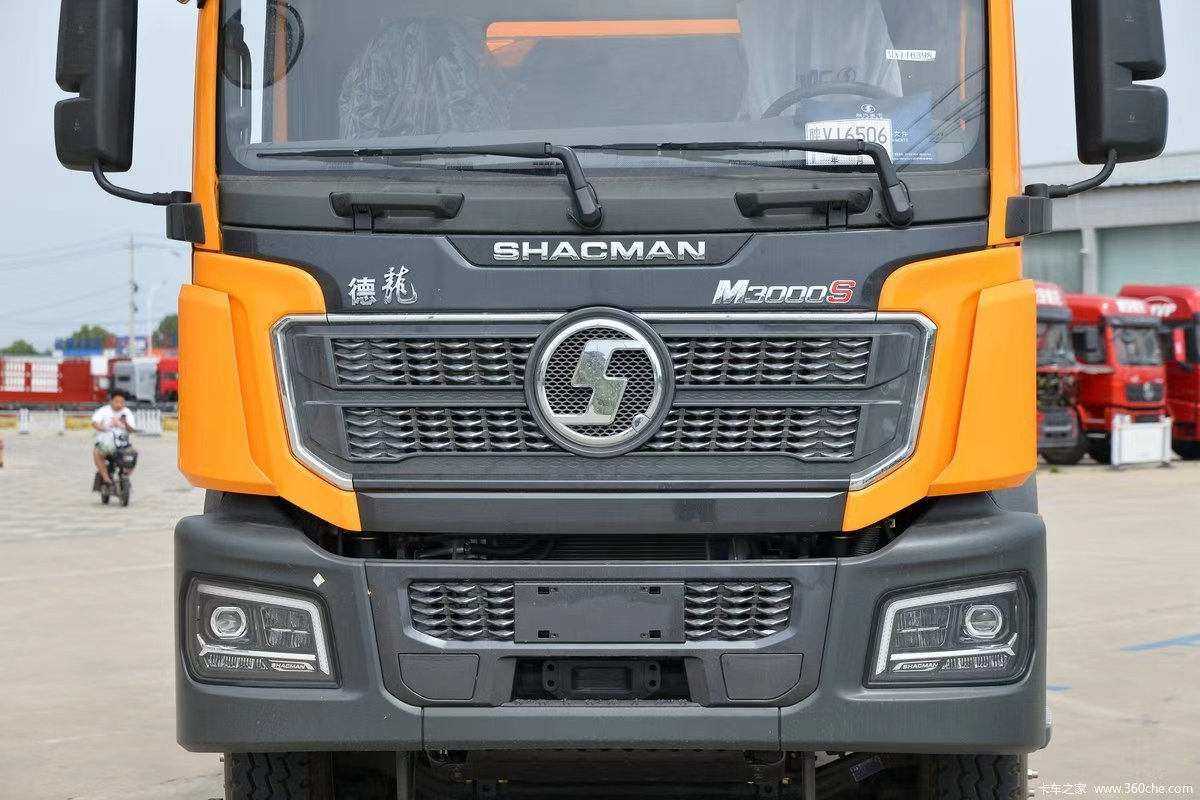
Shacman dump trucks are offered in Euro II, Euro III and Euro V configurations; the level must be written into the order and matched to the destination registration requirement.
Step by step: building the compliance file before you ship
The sequence below keeps the document set tied to the configuration. It works whether you are ordering one lowbed semi trailer or a mixed shipment of skeleton trailers and dump trucks.
Step 1 — freeze the configuration in writing. Model, overall dimensions, axle count and load rating, suspension type, deck height or tank volume, king pin size, emission level where a truck is involved. Luen Auto’s customization scope covers trailer type, dimensions, axle configuration, load rating, beam structure, suspension, rim and tire specification, landing gear, kingpin, coating and branding, so the approved drawing — not the catalog — should become the reference document.
Step 2 — ask your importer for the destination list. Turn the six regional questions above into a short written list of required documents. Keep the reply; it is your defence if a registration office later asks for something no one mentioned.
Step 3 — match every certificate to your order. Product name, model, standard or directive, issuing body, validity. A document that fails any of the four is context, not compliance, and should be filed as such.
Step 4 — verify component marks physically. Twist locks, landing gear, axles, king pin, tank shell thickness, pressure test. Photographs with visible nameplates or cast marks are worth more than another photocopy.
Step 5 — fix the emission level and the weights. Put the emission level, GVW, payload and axle load on the invoice, and check the delivered engine plate and axle plates against them.
Step 6 — agree the inspection record. Luen Auto’s capability documentation states 100% factory inspection before shipment, with in-house load testing, brake performance testing and dimensional verification. Ask for the signed record for your unit numbers, not a generic sample.
Step 7 — settle document language and legalisation. Decide who holds originals, who pays for translation and legalisation, and which documents travel with the vehicle rather than by courier.
Step 8 — align warranty terms with the document set. Luen Auto’s stated terms are a one-year warranty on new trucks with local Sinotruk agent service points, a six-month warranty on trailer driving and supporting devices, and a one-year warranty on trailer carrying devices. Write the covered components and the claim route into the contract before the deposit.
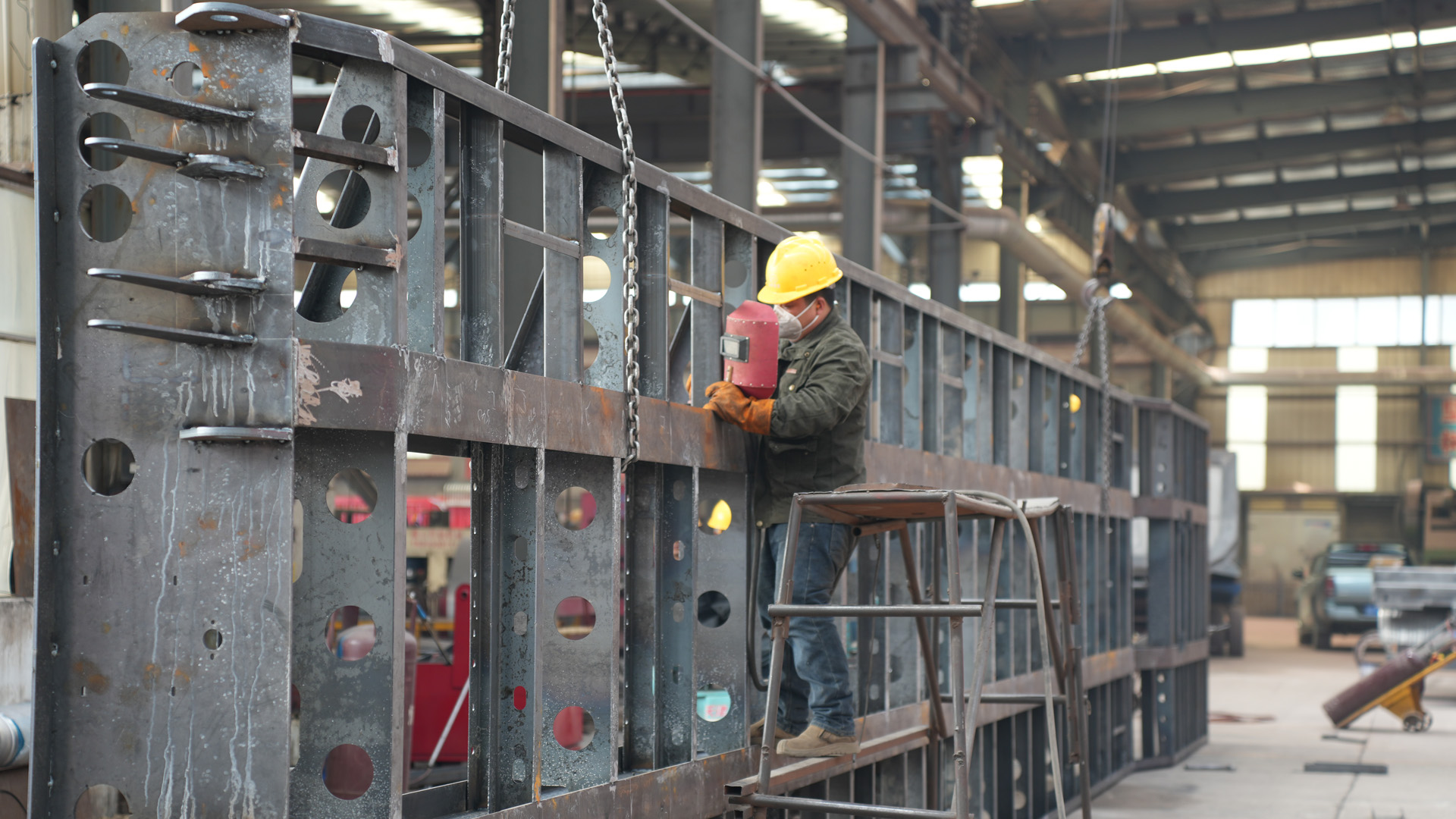
Documentation should describe the unit that leaves the line. Pre-shipment inspection records, not brochure photographs, are the link between the drawing and the delivered trailer.
Use cases: the document set changes with the trailer type
Compliance effort should follow risk. A container chassis and a fuel tanker do not need the same paperwork, and a procurement team that treats them identically wastes time on one and under-prepares for the other.
| Unit type | Verified specification for the datasheet | Document check it triggers |
|---|---|---|
| Skeleton / container semi trailer | 20 ft, 40 ft, 45 ft ISO compatibility; 4, 6 or 8 twist locks, ISO 1161 compliant; JOST or SAF landing gear; 13 t axle load; 2″ or 3.5″ king pin; Q345B main beams | Twist-lock and landing-gear marks photographed against the approved drawing |
| Lowbed semi trailer | 40–100 t payload; deck height 450–600 mm; 2, 3 or 4 axles; 13–16 t axle load; fixed or hydraulic detachable gooseneck; Q550 / Q690 main beams | Approved drawing carries the load rating; oversize and overweight permits checked in the destination |
| Fuel tank semi trailer | 20,000–50,000 L; 1–6 compartments; carbon steel, aluminium or stainless; 5–8 mm shell; GVW 40,000–42,000 kg; earthing reel and emergency valve | Which tank and fittings documents are provided, and what the destination requires for the cargo class |
| Powder tank semi trailer | 32–60 m³; working pressure 0.196–0.2 MPa; test pressure 0.26 MPa; payload 25,000–35,000 kg | Pressure test record supplied with the unit number |
| Shacman dump truck | GVW 31,000–49,000 kg; payload 20–40 t; Euro II, III or V depending on order | Emission level on the invoice matches the engine plate and the registration requirement |
| HOWO / Shacman tractor truck | GCW 40,000–120,000 kg (HOWO) or 40,000–100,000 kg (Shacman); 90# fifth wheel with 20,000 kg capacity; Euro II to V depending on model and order | Fifth-wheel capacity checked against the king-pin load of the trailers it will pull |
Three practical readings follow from that table. First, container haulage carries the lightest regulatory burden of the group and the clearest physical checks, which is why it is a sensible first order from a new supplier. Second, tank equipment concentrates compliance risk in the fittings and the pressure record, so the document request should be specific rather than general. Third, heavy-haul lowbed work shifts the burden to the destination, because permits and route limits — not the trailer — usually decide whether a movement is possible.
Mixed orders are common in fleet purchasing, and they should be documented per unit rather than per shipment. Luen Auto’s records describe a construction and mining customer in Nigeria that began with parts purchases and later ordered quad-axle dump semi trailers for several sites — a case where the customized axle configuration had to be matched to unit-level paperwork rather than to a generic model sheet.
Where compliance files usually break
- Accepting “CE certified” without reading the product line. A CE certificate for a wheel lock is not evidence about a semi trailer.
- Reading an ISO 9001 scope as a manufacturing approval. Check the scope wording and the certified activity.
- Ordering an emission level nobody confirmed. The factory can build Euro II, III, IV or V depending on the model; the destination decides what is accepted.
- Using catalog figures instead of the approved drawing. Payload, deck height and axle load must be identical across invoice, drawing and datasheet.
- Filing trademark or patent documents as safety evidence. They protect brand and design, and they say nothing about roadworthiness.
FAQ
Which certificates should a buyer request from a Chinese trailer manufacturer?
Request four groups: a management-system certificate with its scope and validity; any product or component certificate that names the item you are buying, with the standard or directive it cites; inspection records for your unit numbers; and, if the supplier claims market approval for your country, the specific approval document. Then apply the match test — product name, model, standard and validity against your own order. Luen Auto’s file, for example, contains an ISO 9001 certificate valid to 8 October 2027, a CE certificate for wheel lock model 201L1-A, two trademark registrations and an appearance design patent; each is valid within its scope, and none is a vehicle type approval.
Does a CE certificate mean a Chinese semi-trailer can be registered in Europe?
Not by itself. The meaning of a CE document depends on which directive it cites and which product it names. Luen Auto’s CE certificate CPSC2106112201E covers a wheel lock, model 201L1-A, cites (EU) 2015/863 amending Annex II to 2011/65/EU and the IEC 62321 test series, and is issued for the EU and EEA market — that is a component-level, restricted-substances document, not an approval of a trailer’s structure, braking or lighting. Registration is a separate approval route confirmed with the destination authority. Ask the supplier for the certificate that names the exact product and directive relevant to your requirement, and confirm acceptance with your importer before ordering.
How do I shortlist CE-certified lowbed semi trailer manufacturers in China?
Treat the CE document as an opening filter and then verify three things. First, the certificate itself: product, model, directive and expiry. Second, the lowbed configuration against your actual load: 40–100 ton payload, deck height 450–600 mm, 13–16 ton axle load, 2″ or 3.5″ king pin, and a fixed, hydraulic detachable or extendable gooseneck — with Q550 or Q690 main beam steel stated on the approved drawing. Third, who carries the destination approval, because a heavy-haul lowbed usually needs permits and route clearance that no factory certificate can supply.
Which emission standard should I specify for a Shacman dump truck?
Shacman dump trucks are listed with Euro II, Euro III and Euro V options; Shacman and Sinotruk HOWO tractor trucks are listed with Euro II, III, IV and V; HOWO light duty trucks with Euro II, III and IV. Choose the level accepted for first registration in the destination and supported by the fuel on your routes, write it on the proforma invoice, and check the engine plate on delivery. Emission level is a configuration decision with legal consequences at registration, so it should never be left to a default.
How can I verify ISO 1161 twist locks and JOST landing gear before shipment?
Ask for close, dated photographs and then compare them with the approved drawing. Container semi trailers in Luen Auto’s specification carry 4, 6 or 8 twist locks listed as ISO 1161 compliant, JOST or SAF landing gear, 13 ton axle load, Q345B main beams and a 2″ or 3.5″ king pin. The photograph should show the twist-lock cast marking, the landing-gear nameplate, the axle nameplate and the king-pin stamping. Because 100% factory inspection with load, brake and dimensional testing is stated in the supplier’s capability documentation, those inspection records should be requested for your unit numbers as well.
How do I obtain the compliance documents and catalog for a specific configuration?
Send the intended model, dimensions, axle configuration, payload, emission level and destination market, and ask for the document set matched to that configuration rather than a general folder — then confirm the commercial terms in the same exchange. Luen Auto’s stated warranty terms are one year on new trucks with local Sinotruk agent service points, six months on trailer driving and supporting devices, and one year on trailer carrying devices. The full product range is available in the LUEN Auto product catalog, and configuration-specific questions can go to luengroup@lhaxle.com or +86 17686798823 (WhatsApp available).
Conclusion
Compliance in a Chinese trailer or truck order is a matching exercise, not a collecting exercise. Read the product name, the model, the standard and the expiry date on every document; check twist locks, landing gear, axles and pressure records on the unit itself; and settle the regional questions — approval route, braking and lighting, weight and dimension limits, emission level, document language and import formalities — with your importer before the deposit. That sequence turns a confusing folder into a file that a registration office, an insurer and your own maintenance team can all use.
Shandong Luen Auto Co., Ltd. builds semi trailers and supplies trucks from a 50,000 m² facility in Liangshan County, Jining, Shandong, with an annual output of 1,500 units and exports to Africa, South America and the Middle East. Its product range covers lowbed, flatbed, dump, skeleton, van, fuel tank, dust tank and CNG tank semi trailers, together with tractor trucks, dump trucks and light duty trucks.
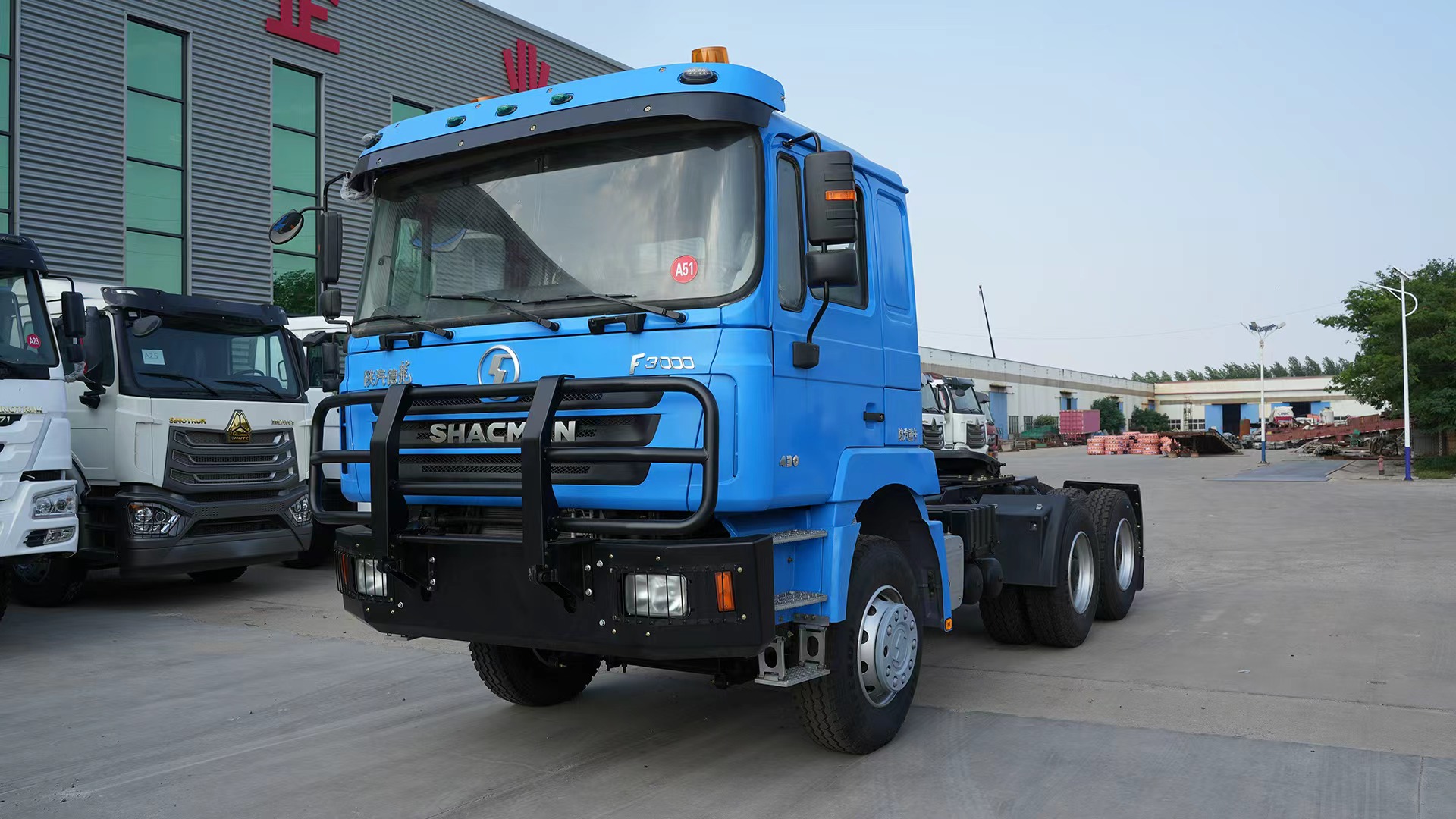
Tractor trucks and trailers are ordered together more often than not — request the document set for both, matched to the same destination market.
Have Questions or Need More Details?
Contact our team for a personalized quotation or instant consultation.
Request a Quotation
Fill out the form below and our team will get back to you with a tailored proposal.
WhatsApp Direct Chat
Prefer to chat in real-time? Message us on WhatsApp for instant assistance & quick answers.
- Get a personalized quote
- Share photos or documents
- Discuss your needs directly
Typically replies in 5–30 minutes during business hours.