
How to Audit a Chinese Truck Trailer Supplier: From Axle Specs to Export Paperwork
An audit of a Chinese truck trailer supplier is two audits running at the same time: a physical audit of steel, axles and running gear, and a paperwork audit of certification, drawings and export documents. A supplier passes the first audit when the trailer matches the drawing; it passes the second when the claim on the quotation matches a document you can hold.
Most trailer quotations that reach importers, fleet owners and project buyers in Africa, South America and the Middle East look similar: a payload figure, a photo, a length and a price. The differences that decide whether a 3-axle lowbed survives years of machinery haulage, or whether a shipment clears customs without a document dispute, usually sit in the lines the quotation did not include.
This guide sets out a buyer-side audit checklist for three trailer families that carry most export volume — lowbed, flatbed and tipper (dump) semi trailers — and explains what to verify from the axle rating up to the export paperwork. Shandong Luen Auto Co., Ltd., a trailer manufacturer and exporter based in Liangshan County, Shandong Province, is used throughout as the worked example of how a verifiable specification is written.
Why Trailer Supplier Claims Are Hard to Compare
The core problem is not that suppliers mislead; it is that the same words carry different meanings between factories. "40–100 ton lowbed" describes a payload class, not a trailer. "High-strength steel" describes a family of grades from Q345B to Q690. "JOST landing gear" describes a brand that either is or is not on the unit.
Three failure patterns repeat in export sourcing:
- Payload without axle math. A supplier quotes a payload but not the axle count, axle rating or suspension type that produces it. In Luen Auto's published specifications, axle load is stated explicitly — 13 tons per axle on flatbed, dump, container and skeleton semi trailers, and 13–16 tons per axle on lowbed semi trailers. Without that number, a payload claim cannot be checked.
- Grade name without location. "Q345B or Q550" tells you which grades are available, not where each grade is used. The audit question is where the grade sits: main beam, frame, floor, or side wall.
- Certification without scope. A CE mark or a certificate reference is only useful once you know which product, which directive and which market it covers. Fuel and tank trailer transport in Europe is regulated under the ADR Agreement, while trailers in the United States with a GVWR over 10,001 lbs fall under annual inspection requirements in 49 CFR 396.17. The document, not the logo, is what customs and insurers read.
The audit therefore converts every claim into one of three things: a measurable dimension, a named material or component, or a document with a defined scope. Anything that cannot be converted is a risk, not a feature.
Industry Background: Why the Chinese Trailer Supply Base Matters
The global semi-trailer market was estimated at USD 22.8 billion in 2024, with expectations of reaching USD 42.3 billion by 2033. Lowboy trailers accounted for the largest share by type at 25.7% in 2024, which matches the practical reality of export demand: heavy machinery relocation, mining equipment and oversized project cargo all depend on lowbed capacity.
China's export base for trucks and trailers is both large and concentrated. Sinotruk (CNHTC) dominated China's heavy-duty truck exports in 2024 with a record 135,000 units, and Shacman heavy-truck exports reached 25,000 units in 2024, a 35% year-on-year increase. Those numbers matter to trailer buyers because the tractor and the trailer have to match: fifth wheel capacity, king pin size and gross combination weight determine whether a trailer is actually usable behind the tractor you plan to buy.
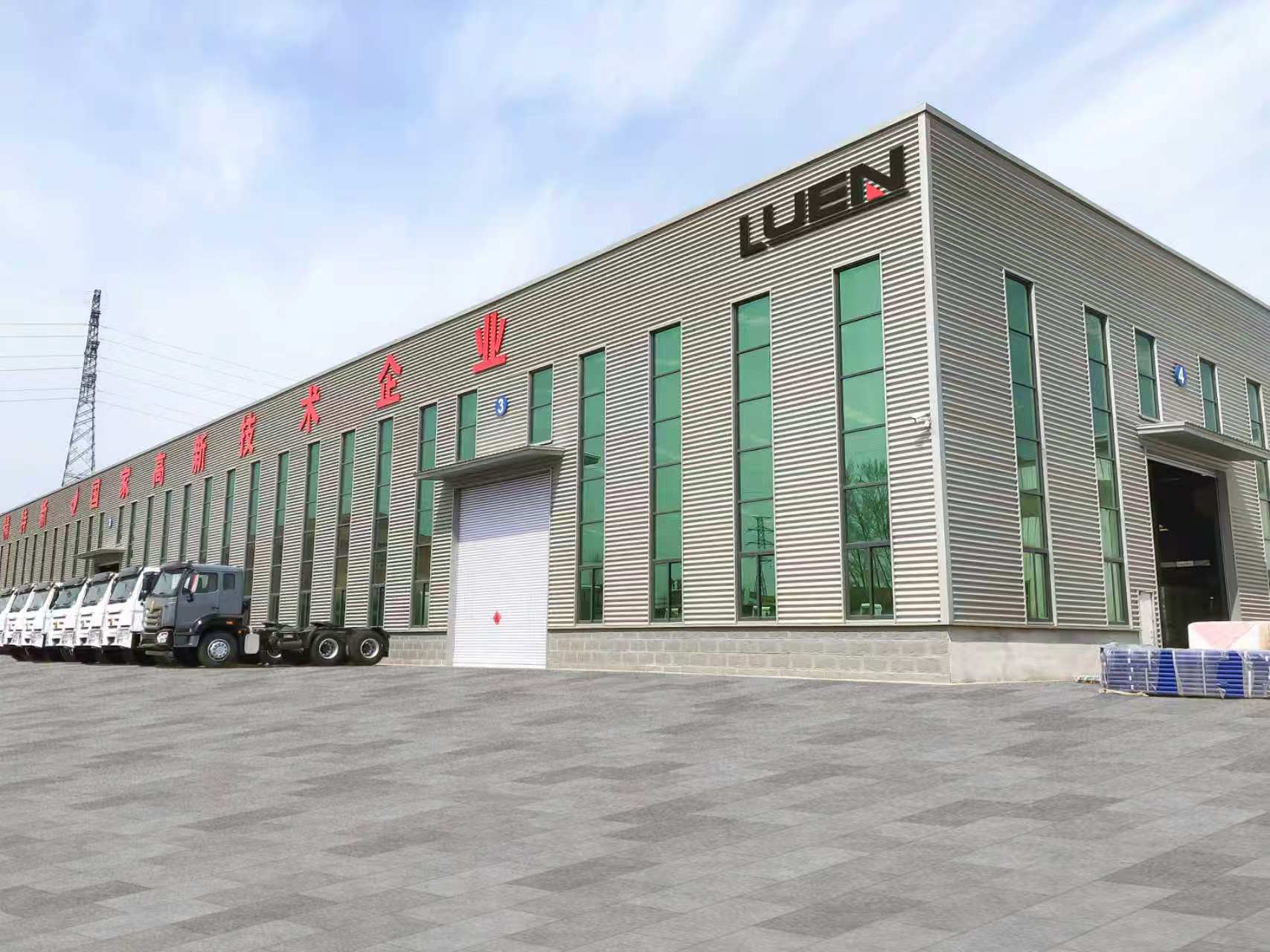
The trailer manufacturing side, by contrast, is more fragmented than the truck side. Luen Auto, for example, was established in 2020, operates a facility covering over 50,000 square metres with approximately 130+ staff, and produces around 1,500 units per year. Export business accounts for 80% of its total sales, with annual exports exceeding USD 30,000,000 and major markets in Africa, South America and the Middle East. Its trailer range covers lowbed, flatbed, dump, skeleton, van, fuel tank, dust tank and CNG tank semi trailers, alongside tractor trucks, dump trucks, used trucks and light duty trucks.
That profile — a newer factory, a high export ratio, medium-scale output — is common in the sector, and it is exactly the profile that requires a structured audit rather than a reference check.
What a Verifiable Specification Looks Like
A specification you can audit answers six questions: which steel grade, in which structural member; how many axles, at what rating; which suspension; which landing gear and king pin; what the declared payload is measured against; and which documents come with the unit. The sections below use Luen Auto's published product data to show the level of detail to demand.
1. Steel grade: Q345B is a starting point, not a selling point
Grade selection is one of the largest drivers of both durability and price, and it is stated per product line rather than per brand.
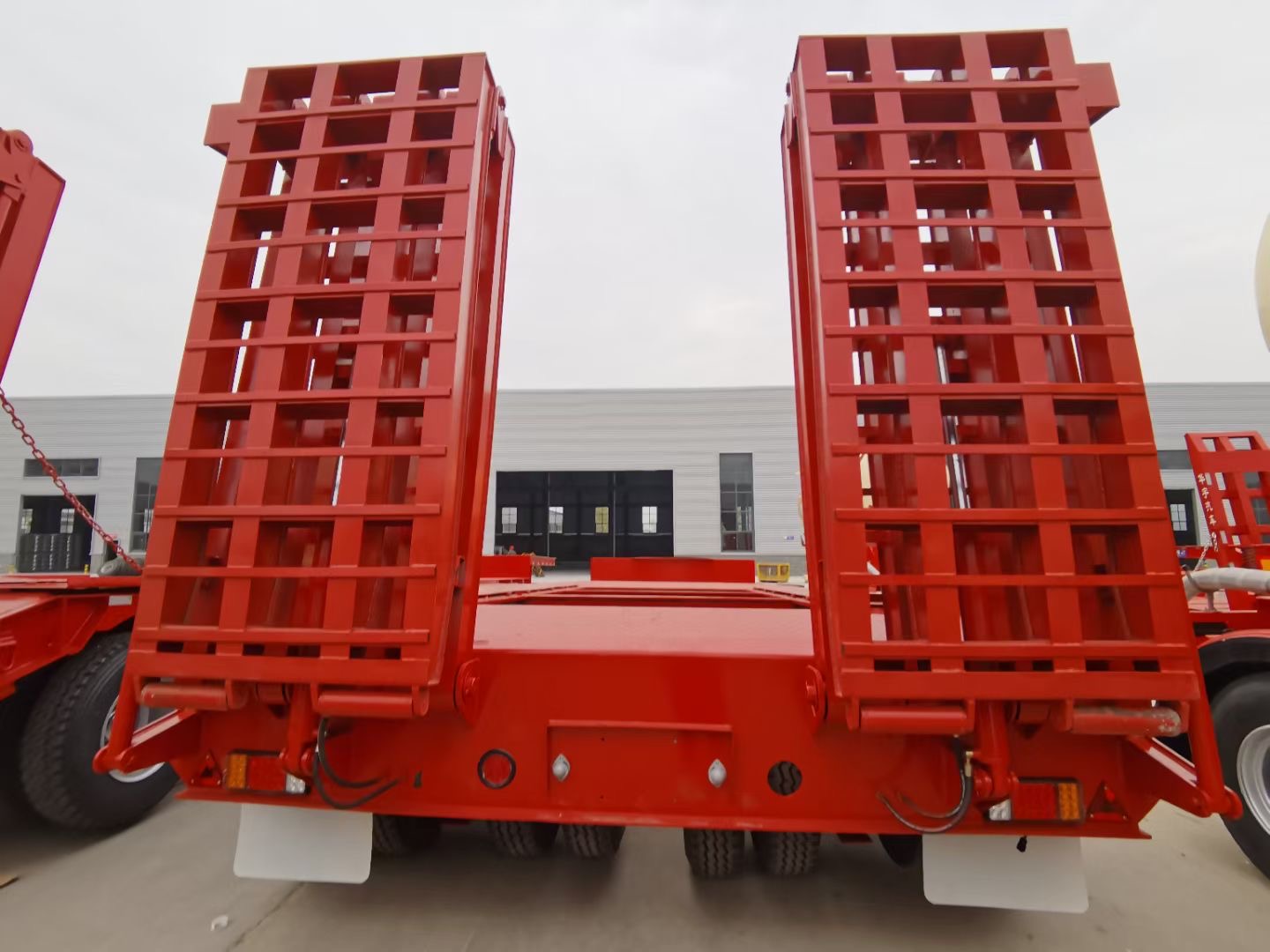
- Lowbed semi trailer: main beam is box-section high-strength steel in Q550 / Q690 or HG785D quenched and tempered steel, with an alloy steel kingpin.
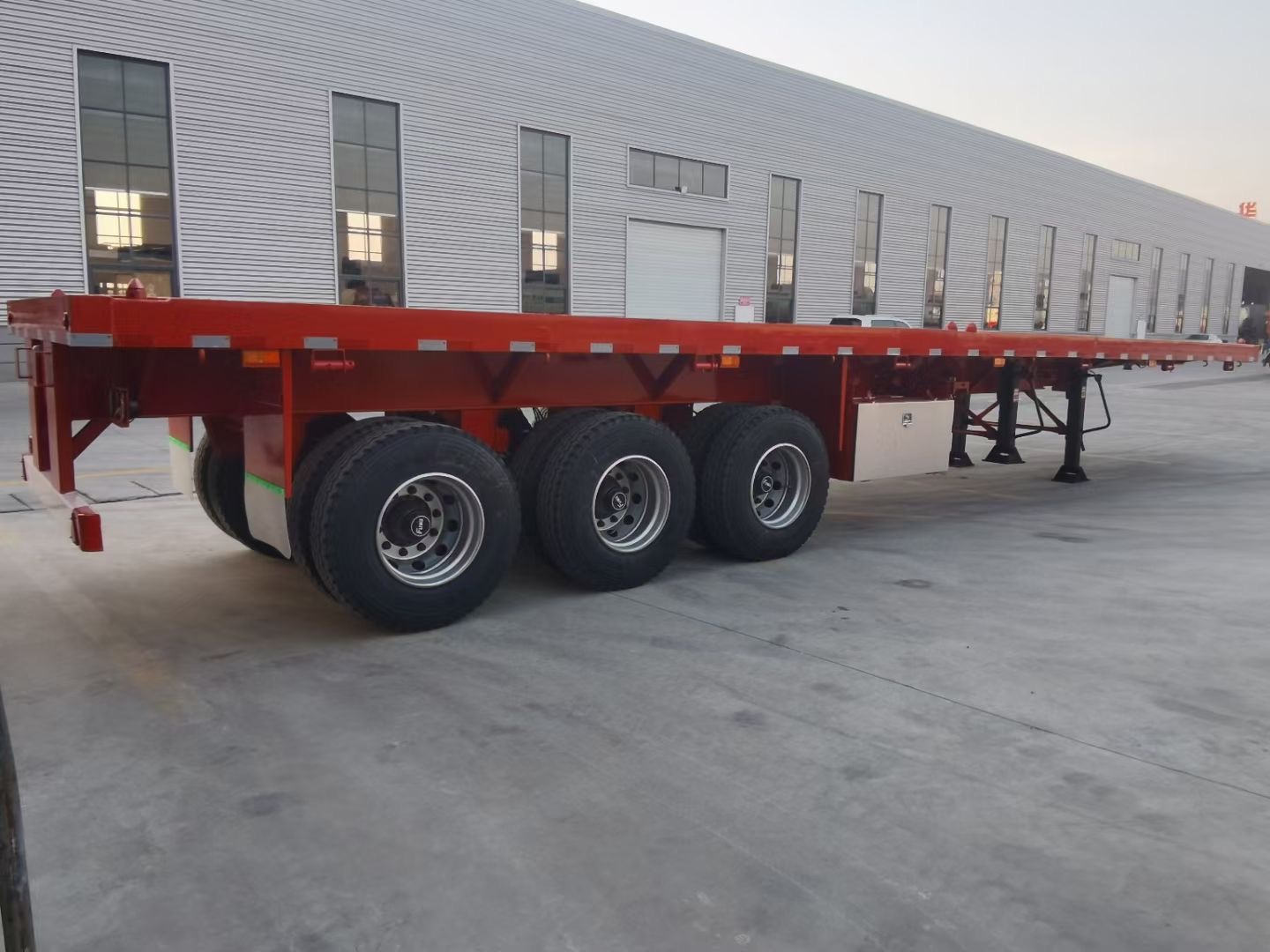
- Flatbed semi trailer: Q345B / Q550 high-tensile steel, with I-beam or H-beam frame construction and a steel checker plate or hardwood floor.
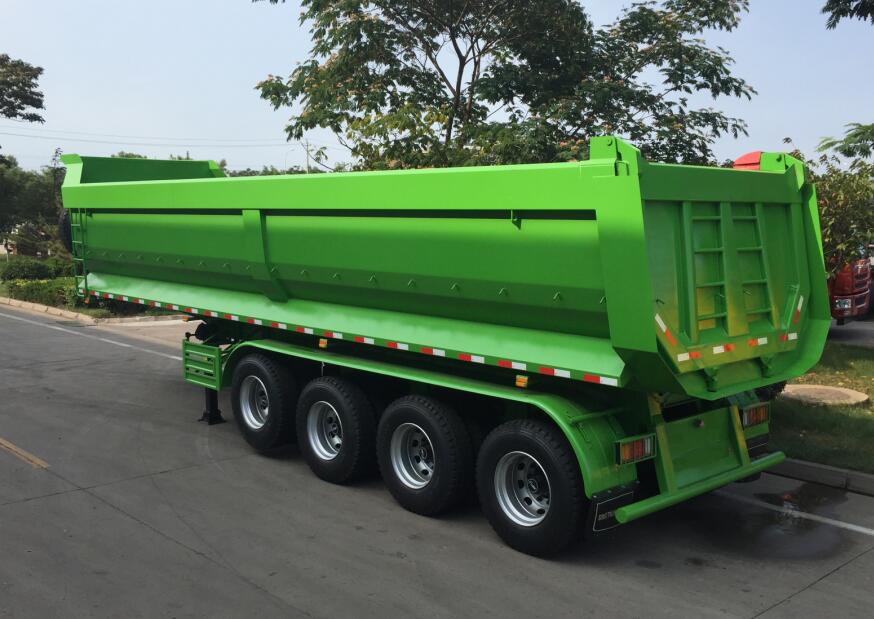
- Dump (tipper) semi trailer: Q345B high-strength carbon steel with a 16Mn steel frame, an 8–12 mm floor and optional HARDOX wear-resistant steel.
- Container / skeleton semi trailer: Q345B high-strength steel main beams.
- Powder tank semi trailer: Q345B carbon steel as standard, 5083 aluminium alloy for the lightweight variant.
The audit action is straightforward: ask the supplier to mark on the drawing which grade applies to the main beam, which to the frame, and which to the floor or tank wall. A quotation that only says "high-strength steel" has not answered the question.
2. Axle configuration and load math
Axle data is what turns a payload claim into engineering. Across the published range the figures are consistent: flatbed semi trailers use 2 or 3 axles at 13 tons per axle; dump semi trailers use 2, 3 or 4 axles at 13 tons per axle; container and skeleton trailers use 2, 3 or 4 axles at 13 tons per axle; lowbed semi trailers run at 13–16 tons per axle, with 3-axle and 4-axle configurations in the standard models.
Buyers should check the axle count in the quotation against the declared payload and against the axle-load limit in the destination country. A trailer that is legally under-axled for its route will be operated overloaded, which is a safety and warranty problem rather than a price problem.
3. Running gear: landing gear, king pin and twist locks
Component brands are the easiest part of an audit because they are visible on the unit and nameable in the contract. Container and skeleton semi trailers are specified with JOST or SAF landing gear, ISO 1161 compliant twist locks in 4, 6 or 8 units, and king pins in 2" or 3.5". Flatbed, dump, container and lowbed trailers all use a 2" or 3.5" king pin, and suspension is either mechanical leaf spring or air, depending on the duty cycle.
For tipper trailers the hydraulic cylinder is a second branded component: HYVA front-mounted or telescopic cylinders, or a domestic single/double-acting alternative. Naming the cylinder brand and mounting type in the contract removes the most common substitution risk on tipper builds.
4. Payload claims by trailer type
Published payload ranges give the buyer a benchmark to test a quotation against: lowbed 40–100 tons; flatbed 40–60 tons; dump semi trailer 30–60 tons with a box volume of 20–40 m³; container and skeleton 30–65 tons; tank semi trailer 28,000–35,000 kg payload at a GVW of 40,000–42,000 kg; powder tank 25,000–35,000 kg with tank volumes of 32, 40, 45, 50 or 60 m³; and CNG tube trailers with a gas capacity of 2,000–6,000 Nm³ at 20–25 MPa working pressure.
If a quotation sits above the top of the relevant range for its axle configuration and steel grade, ask for the calculation behind it. If it sits below without a stated reason, ask why.
5. CE documentation and market compliance
CE documentation is a scope question, not a yes/no question. A trailer exported to Europe may need documentation covering the applicable directive and, for fuel or tank trailers, ADR-related requirements; a trailer exported to the United States with a GVWR over 10,001 lbs sits inside the 49 CFR 396.17 inspection framework. The supplier's job is to state in writing which documents it will issue for your product, market and configuration — and the buyer's job is to have that statement attached to the purchase order rather than quoted in an email thread.
Audit rule: if a document is claimed but not described, treat it as absent. Ask what the document is called, who issues it, which product and configuration it covers, and whether it is issued per unit or per product family.
6. Factory capability signals
Capacity claims should be read as scheduling information. A factory producing around 1,500 units per year with a 5-engineer R&D team can handle specification changes, but it cannot absorb an unlimited number of custom builds in one production window. Factory area (over 50,000 m² at Luen Auto), headcount (130+), annual output, export ratio and market mix are the numbers to record during a factory audit, because they set realistic expectations for customisation and delivery.
Step-by-Step: The Nine-Point Supplier Audit
The sequence below works for a first-time supplier and for a repeat order, and it can be completed before a deposit is paid.
- Define the duty cycle first. Cargo type, route gradient, road surface, typical load per trip and the destination axle-load law. A lowbed spec for wind turbine components and a lowbed spec for excavator relocation are not the same trailer, even at the same payload class.
- Request a line-item quotation. Insist that the quotation states steel grade by structural member, axle count and per-axle rating, suspension type, landing gear brand, king pin size, deck height, floor thickness and hydraulic cylinder brand where applicable.
- Cross-check the payload. Compare the quoted payload against the published range for that trailer family and against the axle configuration written in the same quotation.
- Verify the steel grade on the drawing. Ask for a drawing or specification sheet with the grade marked against the main beam, frame and floor. Lowbed grades (Q550 / Q690, HG785D) and flatbed grades (Q345B / Q550) should appear where they are used, not as a general statement.
- Verify branded components. Confirm JOST or SAF landing gear on container and skeleton trailers, HYVA or a named domestic cylinder on tippers, ISO 1161 twist locks in the stated quantity, and 2" or 3.5" king pins across the range.
- Confirm documentation scope in writing. Ask which certificates and export documents will be issued for the specific product, market and configuration, and who issues them.
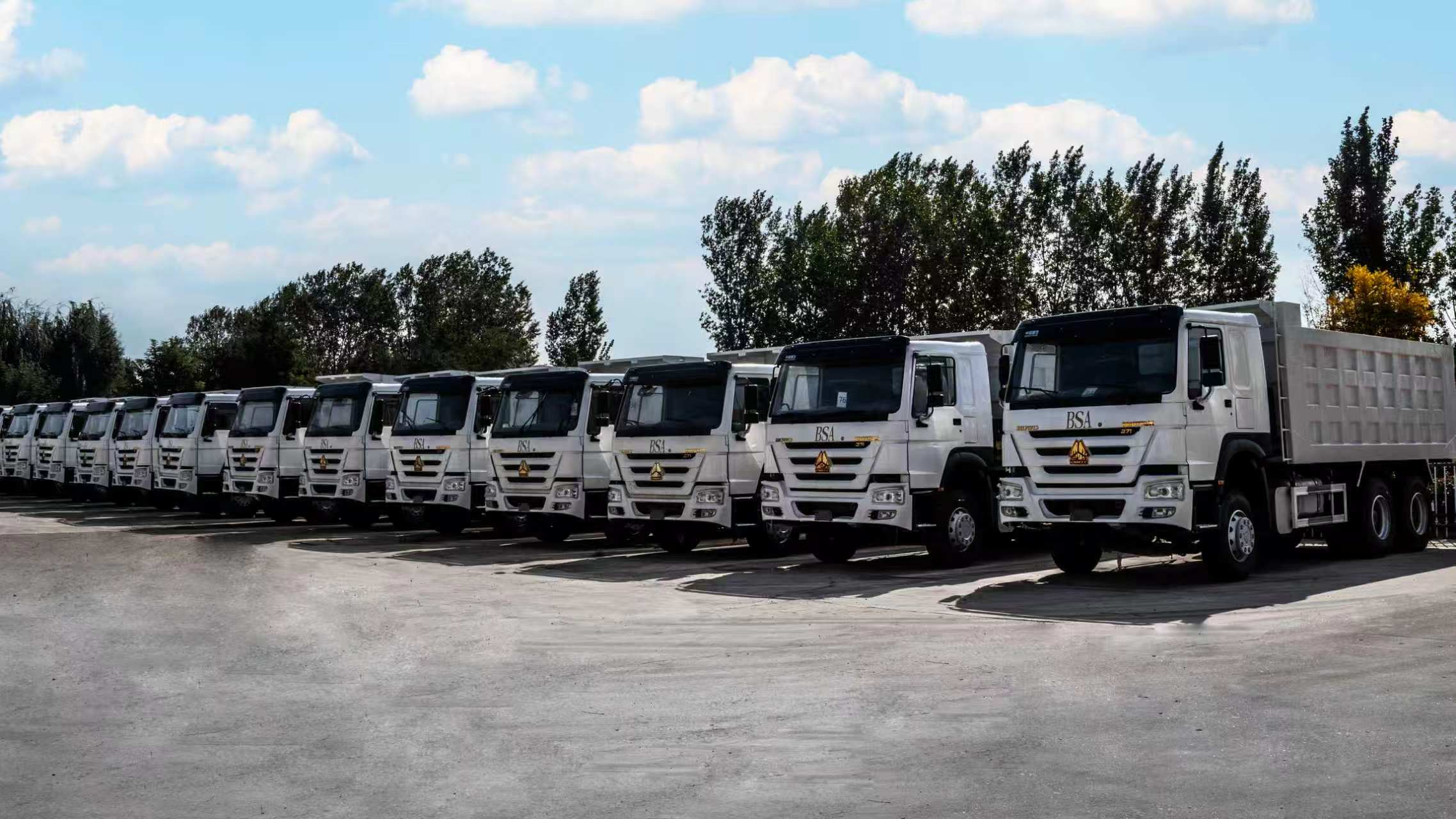
- Audit the factory. Covered area, staff numbers, annual output, R&D headcount, production and shipping records, and the condition of units in progress. For Luen Auto, the published profile is a 50,000+ m² facility, 130+ staff, approximately 1,500 units per year and a 5-engineer R&D team.
- Fix inspection points before shipment. Deck height (450–600 mm loaded on a lowbed; 1,250–1,550 mm on a flatbed), tie-down ring spacing (every 500 mm on flatbed trailers), tipping angle (45–50° on dump semi trailers), king pin size, twist-lock count and material documentation.
- Confirm export paperwork and support before the balance payment. Documentation package, shipping marks, spare parts list and the contact path for after-sales should be agreed in the same document as the specification.
Use Cases: What the Audit Looks Like in Practice
Heavy machinery relocation — lowbed semi trailer
A buyer moving excavators, bulldozers or mining machinery specifies a lowbed in the 40–100 ton payload band. The audit focuses on deck height when loaded (450–600 mm), neck height (1,200–1,400 mm), maximum legal load height (up to 3.5 m), axle load (13–16 tons per axle) and whether the gooseneck is fixed or hydraulic detachable. Ramp type — mechanical or hydraulic — should match the loading equipment on site.
Construction material logistics — flatbed semi trailer
Steel, pipes, timber and wind energy components are the typical loads. The audit focuses on overall length (12,500–16,000 mm, standard 13,000 mm), deck height (1,250–1,550 mm), tie-down ring spacing (every 500 mm), payload (40–60 tons) and frame type (I-beam or H-beam).
Aggregates and mining — dump (tipper) semi trailer
For coal, ore, sand and gravel, the audit focuses on box volume (20–40 m³), box type (U-shape or rectangular), floor thickness (8–12 mm, optional HARDOX), hydraulic cylinder type (HYVA front-mounted or telescopic) and tipping angle (45–50°).
Port and intermodal — container / skeleton semi trailer
Compatibility with 20ft, 40ft and 45ft ISO containers drives the audit: payload 30–65 tons, 2, 3 or 4 axles at 13 tons per axle, twist locks in 4, 6 or 8 units to ISO 1161, and JOST or SAF landing gear.
Comparison Table: Audit Points by Trailer Type
The table below compares the audit-critical specifications of the three trailer families covered in this guide. All figures are the published specification ranges for Luen Auto products.
| Audit point | Lowbed semi trailer | Flatbed semi trailer | Dump (tipper) semi trailer |
|---|---|---|---|
| Declared payload | 40–100 tons | 40–60 tons | 30–60 tons |
| Axle configuration | 3-axle and 4-axle models; 13–16 tons per axle | 2 or 3 axles; 13 tons per axle | 2, 3 or 4 axles; 13 tons per axle |
| Main structural material | Q550 / Q690 or HG785D quenched and tempered steel; box-section main beam | Q345B / Q550 high-tensile steel; I-beam or H-beam frame | Q345B high-strength carbon steel; 16Mn steel frame |
| Deck or floor | Deck height 450–600 mm loaded; maximum legal load height up to 3.5 m | Deck height 1,250–1,550 mm; steel checker plate or hardwood floor | Floor 8–12 mm; optional HARDOX wear-resistant steel |
| Overall dimensions | 11,000–18,000 mm length; 2,480–3,000 mm width | 12,500–16,000 mm length (standard 13,000 mm); 2,480–2,500 mm width | 9,000–12,500 mm length; 2,480–2,500 mm width |
| Branded components to verify | Fixed or hydraulic detachable gooseneck; mechanical or hydraulic ramp; 2" or 3.5" king pin | Tie-down rings every 500 mm; mechanical or air suspension; 2" or 3.5" king pin | HYVA front-mounted or telescopic cylinder; tipping angle 45–50°; 2" or 3.5" king pin |
| Primary audit focus | Payload against axle plan and gooseneck type | Payload against deck and frame section | Payload against box volume and cylinder specification |
Frequently Asked Questions
1. What certification and export documentation should a Chinese trailer supplier be able to produce?
The supplier should be able to state, in writing and per order, which documents apply to your product, market and configuration. Different markets set different requirements: fuel and tank trailer transport in Europe is regulated under the ADR Agreement, and trailers in the United States with a GVWR over 10,001 lbs fall under the annual inspection requirements of 49 CFR 396.17. CE documentation is a scope statement — it should name the applicable directive, the product and configuration covered, and the issuing body. A supplier that answers with a logo instead of a document scope has not answered the question.
2. How can I verify a claimed lowbed payload of 40–100 tons before I order?
Verify it against four published values at once: axle count, axle load, steel grade and deck geometry. Lowbed semi trailers are specified with 13–16 tons per axle, box-section main beams in Q550 / Q690 or HG785D quenched and tempered steel, a deck height of 450–600 mm when loaded, and a neck height of 1,200–1,400 mm. Ask the supplier to show which axle configuration produces the quoted payload, then check that configuration against the axle-load limit of the destination market. The same approach applies across the range: flatbed 40–60 tons on 2 or 3 axles at 13 tons per axle, and dump semi trailers 30–60 tons on 2, 3 or 4 axles at 13 tons per axle.
3. Why do two trailers with the same payload differ so much in price?
Price differences between apparently identical trailers usually come from four line items. The first is steel grade and where it is used: a lowbed main beam in Q550 / Q690 or HG785D differs from a Q345B structure, and a dump trailer floor in optional HARDOX differs from a standard 8–12 mm carbon steel floor. The second is axle count and axle rating. The third is branded running gear — JOST or SAF landing gear on container and skeleton trailers, ISO 1161 twist locks, and HYVA hydraulic cylinders on tippers instead of domestic single or double-acting units. The fourth is suspension type, mechanical leaf spring or air. Ask for these four items to be listed separately in the quotation; a price that cannot be broken down this way cannot be compared with another supplier's price.
4. What should be physically checked on a sample or pre-shipment trailer?
Check the measurable items first, because they can be confirmed against a specification sheet: deck height (450–600 mm loaded on a lowbed, 1,250–1,550 mm on a flatbed), overall length, tie-down ring spacing (every 500 mm on flatbed trailers), tipping angle (45–50° on dump semi trailers) and neck height (1,200–1,400 mm on lowbeds). Then check the named components: axle rating, landing gear brand (JOST or SAF on container and skeleton trailers), twist-lock quantity on container trailers, hydraulic cylinder brand on tippers, and king pin size, which is 2" or 3.5" across the range. Finally, check the paperwork that travels with the unit — a specification that matches the contract is worth more than a competitive price that does not.
5. How does a factory's production capacity affect delivery planning?
An annual output figure tells you how many build slots exist in a year and how much room there is for specification changes. A factory producing around 1,500 units per year, with a facility of over 50,000 m², 130+ staff and a 5-engineer R&D team, can accommodate customised trailer specifications — but the customisation has to be agreed before the production slot is reserved, not after. For a first order, request the production window in writing together with the documentation scope, then align inspection and shipment dates to it. Buyers who want to start a supplier audit from a concrete configuration can request the current Luen Auto product catalogue and specification sheets.
Conclusion
A Chinese truck trailer supplier is audited twice: once as a factory and once as a documentation source. The factory audit answers whether the trailer can be built — steel grade in the right structural member, axle count and rating that match the payload, branded landing gear, twist locks and hydraulic cylinders, and deck geometry that fits the cargo. The documentation audit answers whether the trailer can be exported, financed and operated lawfully in the destination market, which requires a stated scope per market rather than a logo on a quotation.
Use the nine-point checklist as a template. Demand line-item specifications, cross-check payload against axle configuration, confirm documentation scope in writing, record factory capacity figures during a visit or video walkthrough, and fix inspection points before shipment. Buyers who do this compare trailers instead of prices — and they rarely discover a capacity problem after the container has sailed.
Next step
Request a quotation or specification sheet for lowbed, flatbed, dump, container, skeleton, tank or CNG semi trailers, or ask for a factory walkthrough before you commit. Send your duty cycle, destination market and axle-load requirement, and the team will return a line-item specification rather than a headline price.
Email: luengroup@lhaxle.com · Phone / WhatsApp: +86 17686798823 · Website: www.luen-trailertruck.com
Address: Xuji Industrial Park, Liangshan County, Jining City, Shandong Province, China
Download the full product catalogue: LUEN Auto Product Catalog (PDF)
Have Questions or Need More Details?
Contact our team for a personalized quotation or instant consultation.
Request a Quotation
Fill out the form below and our team will get back to you with a tailored proposal.
WhatsApp Direct Chat
Prefer to chat in real-time? Message us on WhatsApp for instant assistance & quick answers.
- Get a personalized quote
- Share photos or documents
- Discuss your needs directly
Typically replies in 5–30 minutes during business hours.