
Tank, Powder & CNG Trailer Compliance: Specs to Confirm
Tank, Powder & CNG Trailer Compliance: Specs to Confirm
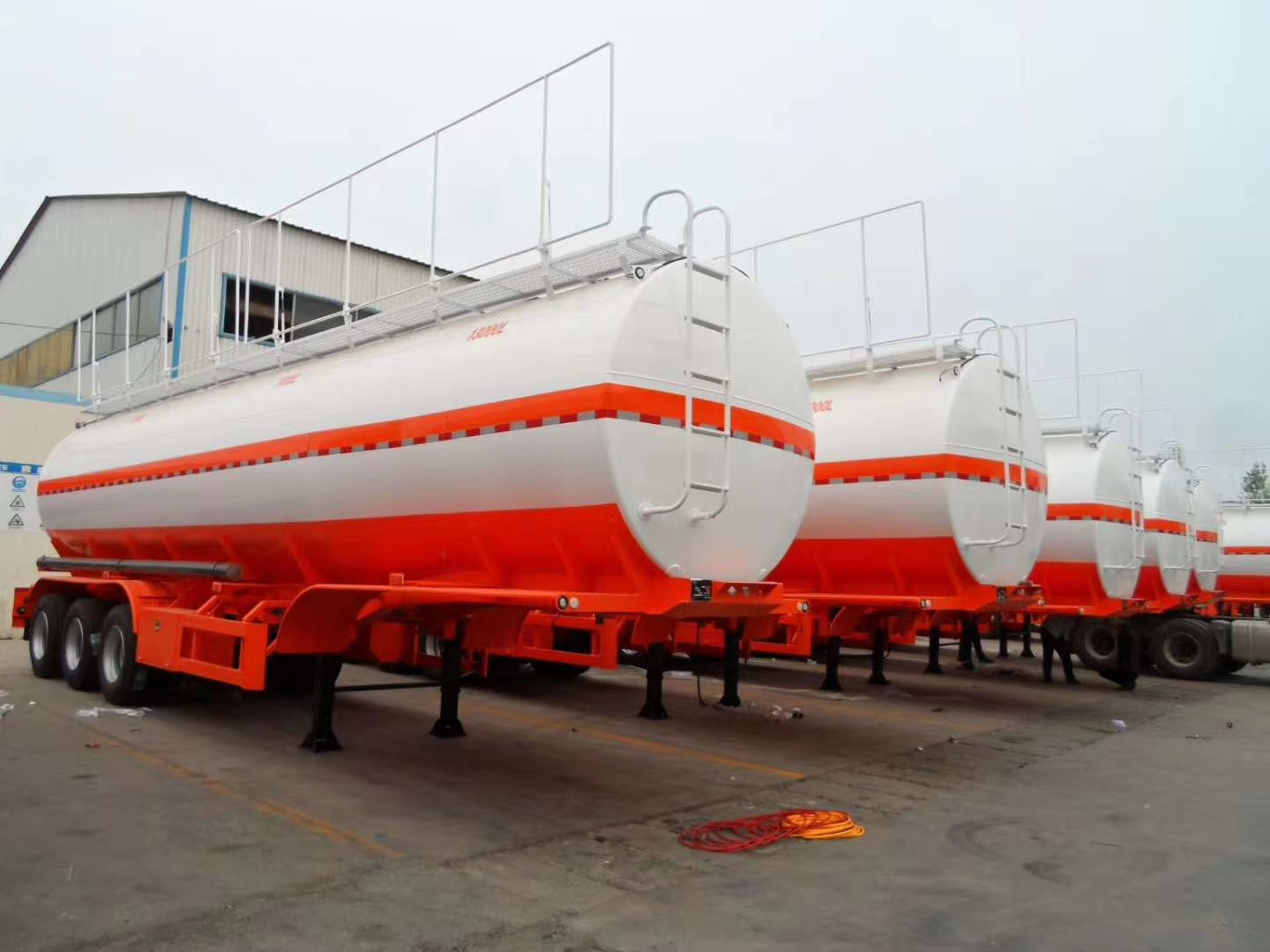
Cover: a three-axle tank semi trailer. What a destination market evaluates is the declared configuration, not the thickness of the certificate folder.
Tank and bulk trailer compliance is settled by five declared numbers long before a vessel is booked: gross vehicle weight (GVW), payload, overall dimensions, tank volume, and — for gas — working pressure and capacity. Match those numbers to the market where the trailer will be registered and loaded, and the order is buildable. Match them to the wrong market, and a perfectly sound truck trailer can arrive unable to be registered, insured or legally loaded.
This guide is written for importers, fleet owners and project procurement teams buying tank semi trailers, powder tank semi trailers and CNG tube trailers for a named destination market. It explains how to read a manufacturer's declared parameters, how to test them against local requirements, and why a generic export certificate should never be treated as evidence that a specific configuration is approved.
Shandong Luen Auto Co., Ltd. is a trailer and used special-purpose vehicle manufacturer and exporter based at Xuji Industrial Park, Liangshan County, Jining City, Shandong Province, China, operating a factory of more than 50,000 m² with 130+ employees and an export share of 80%, mainly to Africa, South America and the Middle East. The parameter examples in this guide are taken from its published product specifications, which makes them a practical set for showing how such figures should be read before suppliers are compared.
The compliance gap: a build specification is not a market approval
A tank trailer order answers two different questions at once, and buyers routinely merge them. The first question is what the factory will build. The second is what the destination market will accept. A specification sheet answers the first with precision and says nothing about the second, because the second is answered by whichever authority registers the vehicle or regulates the cargo where it will work.
Three layers are involved, and they are usually quoted as one package:
- Vehicle level: GVW, axle load, overall length, width and height, plus braking, lighting and marking — checked against what the destination permits on its roads.
- Containment level: tank shell, compartments, lining, pressure vessels, valves and safety devices — checked against the cargo and the pressure regime the cargo imposes.
- Documentation level: the certificates, inspection records and specification sheets that the registration authority, the insurer and the importer of record will ask to see.
This article does not restate national rules. Those differ market by market, they change, and a supplier's guide is not the right source for them. What it does instead is fix the parameters you must confirm, show where each parameter sits in the manufacturer's data, and identify the questions to put to the authority that will register the trailer.
Why an export certificate does not clear a tank trailer
A supplier's document folder normally holds several unrelated documents filed under one word: certification. They answer different questions, have different scopes, and are issued by different bodies. Reading them properly is the fastest compliance check a buyer can perform, because the scope field tells you immediately how much weight a document can carry.
The quality certificate covers a management system, not a product
Shandong Luen Auto's quality management system certificate, number 47424Q2464R0S, was issued by ZHONGNUO CERTIFICATION CO., LTD. on 2024-10-09 and runs to 2027-10-08 against GB/T 19001-2016 / ISO 9001:2015. Its stated scope is the sales of semi trailer, semi trailer parts and tractor, with a global market scope. That is a genuinely useful document: it indicates the supplier's sales process has been audited against a recognised standard. It does not state that a 45,000 L chemical tanker satisfies your market's vehicle or dangerous-goods requirements, because a management-system certificate is not a product approval and was never intended to be one.
A product certificate is only as wide as its scope
The clearest teaching example sits in the same folder. The CE Certificate of Compliance numbered CPSC2106112201E was issued on 2021-06-11 by CPStes, with a market scope of all EU member states and the European Economic Area. Its product scope is a wheel lock, model 201L1-A, tested against (EU) 2015/863 amending Annex II to 2011/65/EU and the IEC 62321 series. The certificate is real, current and irrelevant to a tank, powder or CNG trailer.
Any buyer who accepts "we have CE" as an answer to "is this trailer approved for my market" has accepted a document that does not address the question. Ask for the scope field — product name, model number, standards cited, issuing body and expiry date. A supplier who can produce those five items for the product you are actually buying is giving you something; a supplier who can only produce a logo is not.
Brand registrations and factory inspection answer different questions again
The LUEN AUTO mark is registered in mainland China in class 12 under registration 86628573 (2026-02-14 to 2036-02-13), with a second registration numbered TMZC86619669D01T260306 (2026-02-24 to 2036-02-13). These protect a name in one jurisdiction; they say nothing about product conformity anywhere. The company also states that its products have passed China's CCC mandatory certification and that every unit is 100% inspected before shipment, including load testing, brake performance testing and dimensional verification. Of the whole folder, the pre-shipment inspection record is the most useful to a buyer, because it is specific to the unit being paid for — but it proves the trailer matches the agreed specification at the factory gate, not that your market will register it.
| Document | What it actually evidences | What it does not evidence |
|---|---|---|
| ISO 9001 certificate 47424Q2464R0S, ZHONGNUO CERTIFICATION CO., LTD., 2024-10-09 to 2027-10-08 | A certified management system for the sales of semi trailer, semi trailer parts and tractor | Conformity of any individual tank, powder or CNG trailer with a destination market's rules |
| CE Certificate of Compliance CPSC2106112201E, CPStes, issued 2021-06-11 | Conformity of the named product (wheel lock, model 201L1-A) against the standards cited on the certificate | Approval of a complete trailer, or of any model not named on the certificate |
| CCC mandatory certification (company statement) | China-market certification referenced for the company's products | Recognition in your market — confirm with your authority whether it is accepted, and for which vehicle category |
| China trademark registrations 86628573 and TMZC86619669D01T260306, class 12 | Ownership of the LUEN AUTO brand in mainland China | Any product conformity, safety performance or market approval |
| Pre-shipment inspection record with load, brake and dimensional checks | That the unit built matches the agreed specification when it leaves the factory | Registration eligibility or cargo-handling permission at destination |
| Order specification sheet | What was ordered, at which values and with which options | That what was ordered is legally usable in the intended market |
The practical rule is short. For every document you are shown, ask which product and model it names, which standards it cites, who issued it and when it expires. If any of those four answers is missing, the document cannot carry the weight being placed on it — and "we have exported there before" is not one of the four answers.
Five declared numbers to fix before you request a quotation
The parameters below are the ones that decide whether an order is workable. Each is a declared figure on the manufacturer's specification, and each has to be matched to a market condition that only the buyer can confirm.
1. GVW, payload and axle load
For a liquid tank semi trailer, the documented envelope is a GVW of 40,000–42,000 kg with a payload of 28,000–35,000 kg on three axles rated at 13 t each. A CNG tube trailer is declared in the same 40,000–42,000 kg GVW band. Two consequences matter.
First, axle rating and GVW are separate declarations. Three axles at 13 t produce an axle-group rating of 39,000 kg (3 × 13,000 kg), while the declared GVW sits above that figure because part of the gross weight is carried through the kingpin by the tractor. A market that polices axle load and a market that polices gross combination weight therefore constrain the same trailer in different ways. Confirm which limit your route is actually checked against before you approve the configuration.
Second, the tractor is part of the compliance picture. A trailer plated at 40,000–42,000 kg GVW, coupled to an under-specified tractor unit, does not become compliant because the trailer plate is correct. Check the combination, not the trailer alone.
2. Tank volume against payload: density decides which limit binds
A tank semi trailer accepts 20,000–50,000 L across one to six compartments, while payload is declared at 28,000–35,000 kg. Those two figures do not scale together, because litres measure volume and kilograms measure mass.
Take a cargo with a density of 1 kg/L. At that density, 35,000 kg of product occupies 35,000 L — comfortably inside a 50,000 L shell. A denser cargo reaches the 35,000 kg payload ceiling at a smaller volume, so the tank runs part-full; a lighter cargo may fill the shell before the payload limit is reached. Neither outcome is a defect. Both are the predictable result of ordering volume and mass as independent numbers, and both should be checked against the density of the cargo you will actually carry most often.
Compartment count is a separate decision. One to six compartments change how many delivery drops a single load can serve, and how mass is distributed across the axles when the trailer runs part-loaded.
3. Overall dimensions against the route, not only the rulebook
Documented overall length is 11,000–12,500 mm for a tank semi trailer and 12,500–13,500 mm for a CNG tube trailer, both at 2,480–2,500 mm width. National length and width limits are the obvious check. The less obvious checks are the ones that stop a delivery: site gate widths, silo bay clearances, weighbridge platform length, turning circles on the final mile, and the height of the discharge point. A trailer that satisfies a national dimension limit can still be unusable in the customer's yard, and that problem is discovered after shipping, not before.
4. Working pressure and gas capacity on a CNG tube trailer
The documented CNG envelope is a working pressure of 20–25 MPa (200–250 bar), with 8, 10, 12, 16 or 20 tubes of 406–559 mm diameter and 6,000–12,000 mm length, a total water volume of 3,000–8,000 L, and a gas capacity of 2,000–6,000 Nm³ on three axles at 40,000–42,000 kg GVW. Tubes are 37Mn seamless steel or chrome-moly steel, and the safety set includes pressure relief valves, emergency shutoff and an earthing reel.
Two buyer notes follow. Gas capacity expressed in Nm³ is a normalized figure, so the gas actually moved per trip depends on fill pressure and temperature; compare competing offers at the same reference conditions or the comparison carries no information. Second, pressure equipment usually sits under a separate approval and periodic-inspection regime from the vehicle itself. Ask your registration authority and your insurer which pressure documents they will want, in which language, and how often they must be renewed.
5. Bulk powder volume and discharge arrangement
Bulk powder capacity is commonly discussed across a 32–60 m³ band. The documented three-axle configurations in that range are 40 m³, 50 m³ and 60 m³ units, with an aluminium alloy powder tanker option for buyers who need to trade tare weight against volume. On low-density powders, volume usually binds before mass, which makes the volume decision feel simple and the axle-load check easy to skip. Confirm the gross weight and axle load at full volume, with the cargo you intend to carry.
Discharge is where powder projects fail quietly. Pneumatic dry bulk discharge depends on air supply, hose runs and the height of the receiving silo. Confirm the discharge arrangement at destination before fixing the volume, because a larger tank that cannot be emptied at the silo is simply a smaller tank with extra steel.
A seven-step confirmation sequence before you sign
The sequence below turns the five parameters into an order that can be checked. It runs from the cargo backwards to the paperwork, which is the reverse of how quotations usually arrive.
- Write the operating envelope. Cargo type and density, typical and maximum load, trips per shift, route profile, discharge points, climate and driver availability. This document is the basis for every later decision.
- Convert the cargo into two numbers. Required mass and required volume, then note which one binds. This single step prevents the most common tank ordering error — a shell sized for volume that can never be filled because the payload plate limits it first.
- Fix GVW, axle count and axle load. Compare the declared figures with the tractor you will use and with the mass limits your market enforces. Configuration flexibility is real: a West African construction and mining buyer's fleet runs quad-axle dump semi trailers specified around local heavy-load conditions, and the same principle applies when a market's axle rules point away from the standard three-axle arrangement.
- Fix dimensions. Overall length, width and height, discharge height, and the physical turning envelope at both ends of the route.
- Fix the containment and safety specification. For liquids: compartment count, material, tank thickness, manhole and discharge type. For powders: volume, tank material and pneumatic discharge arrangement. For gas: working pressure, tube count and safety fittings.
- Build the documentation list with named owners. Registration authority, importer of record, insurer and any inspection body each want something different. Assign the document to the party responsible for obtaining it, and date it.
- Freeze the specification sheet and acceptance criteria. Agree in advance what the pre-shipment inspection record must show, and plan the timeline: 30–45 days for standard configurations, longer for complex custom orders, with the shipping window added on top rather than assumed inside it.
Three configurations in practice
Fuel and chemical distribution
A three-axle tank semi trailer at 20,000–50,000 L with one to six compartments, carbon steel Q235B or Q345B, stainless steel 304/316 for food-grade or aggressive chemical service, or aluminium alloy 5083 for weight saving, at a shell thickness of 5–8 mm. Safety specification includes an earthing reel for anti-static protection, a top DN500 manhole, emergency valve, pressure vent and rollover protection, with bottom valve, pneumatic or pump discharge. The buyer's confirmation work sits with the dangerous-goods and tank rules that apply to the specific cargo in the destination market.
Cement and bulk powder haulage
A 40 m³, 50 m³ or 60 m³ three-axle powder tanker with pneumatic dry bulk discharge, or the aluminium alloy variant where tare weight matters. The confirmation work is discharge-side: silo height, air supply, hose length and the axle load at full volume.
CNG mother–daughter station logistics
A CNG tube trailer at 20–25 MPa with 2,000–6,000 Nm³ gas capacity on three axles at 40,000–42,000 kg GVW, with pressure relief valves, emergency shutoff and earthing reel. The confirmation work is pressure documentation and periodic inspection on one side, and the fill and receiving station pressure on the other.
The same logic, different constraints
Nothing in this sequence is unique to tanks. A flatbed semi trailer or lowbed semi trailer is constrained mainly by deck height, payload and dimensional envelope; a skeleton semi trailer or container chassis by twist-lock configuration and container length; a dump trailer by body volume and tipping stability. The constant across every truck trailer category is that the declared parameter has to be matched to a market condition, and the manufacturer can only supply half of that match.
Documented parameters across the three families
The table below sets out the figures a buyer should expect to see on a specification sheet, using the documented values for each family. Where a value is configuration-dependent, the correct action is to confirm it on the quotation rather than to assume a figure from another product.
| Parameter | Tank semi trailer (liquid) | Powder tank semi trailer | CNG tube trailer |
|---|---|---|---|
| Capacity | 20,000–50,000 L, 1–6 compartments | 40 m³, 50 m³ and 60 m³ three-axle configurations; aluminium alloy option; volumes commonly discussed in a 32–60 m³ band | 2,000–6,000 Nm³ gas capacity; 3,000–8,000 L total water volume |
| Declared GVW | 40,000–42,000 kg | Confirm per configuration and axle set on the quotation | 40,000–42,000 kg |
| Payload or working limit | 28,000–35,000 kg | Set by volume and bulk density; confirm at gross weight | Set by gas capacity and fill conditions |
| Axles and axle load | 3 axles, 13 t each | 3-axle models documented; confirm per order | 3 axles |
| Containment | Tank thickness 5–8 mm; carbon steel Q235B/Q345B, stainless 304/316, aluminium alloy 5083 | Pneumatic dry bulk discharge | Working pressure 20–25 MPa (200–250 bar); 37Mn seamless steel or chrome-moly tubes, 406–559 mm diameter |
| Overall size | 11,000–12,500 mm long, 2,480–2,500 mm wide | Confirm per volume on the quotation | 12,500–13,500 mm long, 2,480–2,500 mm wide |
| Safety fittings | Earthing reel, emergency valve, pressure vent, rollover protection, top DN500 manhole | Confirm per order | Pressure relief valve, emergency shutoff, earthing reel |
| Confirm first in market | Dangerous-goods and tank rules for the specific cargo | Axle load at full volume and discharge point height | Pressure-equipment approval and periodic inspection |
Read the table as a checklist, not a catalogue. The values that carry a range are ranges on a documented platform; the values marked confirm are the ones that change with the order and must therefore appear on the quotation you sign, in the units your authority uses.
Frequently asked questions
Which document should a tank trailer buyer check first?
Start with the scope field on the quality certificate, then ask for the pre-shipment inspection record. Shandong Luen Auto's ISO 9001 certificate 47424Q2464R0S is valid from 2024-10-09 to 2027-10-08 with a scope covering the sales of semi trailer, semi trailer parts and tractor, which tells a buyer that the supplier's sales process is audited — not that a specific tank configuration is approved anywhere. The inspection record is unit-specific and shows load testing, brake performance testing and dimensional verification, which is the closest documentary proof that the trailer you receive matches the sheet you signed. Neither document replaces the list of documents your own registration authority requires.
Are Chinese tank and bulk trailer manufacturers CE-certified, and what does a CE certificate cover?
A CE certificate is only meaningful when its stated scope names the product and model you are buying. In Luen's documentation set, CE Certificate of Compliance CPSC2106112201E was issued on 2021-06-11 by CPStes for the EU and EEA markets, and its scope is a wheel lock, model 201L1-A, tested against (EU) 2015/863 amending Annex II to 2011/65/EU and the IEC 62321 series. That certificate says nothing about a tank semi trailer, a powder tanker or a CNG tube trailer. When a supplier says the company is CE-certified, ask for the certificate number, the product and model named in the scope, the standards cited and the expiry date — and treat a component certificate as a component certificate.
Can GVW, payload and axle configuration be changed for my market?
Yes, within the limits the buyer must confirm. Luen's customization scope covers trailer type, overall dimensions, axle configuration, load rating, beam structure, suspension type, rim and tyre specification, landing gear, kingpin, paint and branding. The documented reference points are a tank semi trailer at 40,000–42,000 kg GVW and 28,000–35,000 kg payload on three 13 t axles, and a CNG tube trailer at 40,000–42,000 kg GVW. Changing those figures is an engineering and a legal question at the same time: the factory can build to a declared figure, but only the buyer's market can say whether that figure may operate on its roads. Confirm the limit first, then specify the trailer to it, and check the tractor unit against the same limit.
What working pressure and gas capacity should I specify for a CNG tube trailer?
The documented range is a working pressure of 20–25 MPa (200–250 bar) with 8, 10, 12, 16 or 20 tubes, 406–559 mm tube diameter, 6,000–12,000 mm tube length, 3,000–8,000 L total water volume and 2,000–6,000 Nm³ gas capacity on three axles at 40,000–42,000 kg GVW. Tubes are 37Mn seamless steel or chrome-moly steel, with pressure relief valves, emergency shutoff and an earthing reel. Choose the pressure and capacity that your filling station can supply and your receiving station can accept, compare competing offers at the same reference conditions because Nm³ is a normalized figure, and confirm the pressure-equipment documentation and inspection interval your market requires before the order is placed.
How do I choose between 40 m³, 50 m³ and 60 m³ powder tank volumes?
Decide by which limit binds at full load, not by which number looks larger. The documented three-axle configurations are 40 m³, 50 m³ and 60 m³, with an aluminium alloy powder tanker option, and the wider market band runs from about 32 m³ to 60 m³. On low-density powders the volume limit is usually reached before the mass limit, so confirm the gross weight and axle load at full volume with your actual cargo, then check the discharge side: air supply, hose run and the height of the receiving silo. A volume that cannot be emptied efficiently at destination costs more per tonne than a smaller tank that can.
What are the minimum order quantity, lead time and warranty terms?
The minimum order is 1 unit for standard models, with flexible terms for trial orders and sample evaluation. Lead time is 30–45 days for standard configurations, with custom orders negotiated according to specification complexity and shipping time added separately. Warranty terms are 1 year on new trucks, 6 months on trailer driving and supporting devices, and 1 year on trailer carrying devices, supported by a multilingual sales team reachable on WhatsApp. Before confirming, freeze the specification sheet, agree the acceptance criteria for the pre-shipment inspection, and settle which documents your market requires. The current Luen Auto product catalog, including tank, powder and CNG configurations, can be downloaded here: LUEN Auto Product Catalog (PDF).
What to take into the negotiation
Compliance for a tank, powder or CNG trailer comes down to a short list that can be checked in a single meeting. Match GVW, payload and axle load to the market and to the tractor. Match tank volume to cargo density, and powder volume to the discharge point. Match CNG working pressure and gas capacity to the fill and receiving stations. Match overall dimensions to the route, not only to the rulebook. Then read every certificate by its scope field, because the ISO 9001 certificate covers a management system, the CE certificate in the folder covers a wheel lock, the trademark registrations cover a brand name, and only the order-specific inspection record speaks about the unit you are buying.
Shandong Luen Auto builds tank semi trailers, powder tank semi trailers and CNG tube trailers to declared specifications at its Shandong factory, and the documented figures quoted in this guide are the starting point for that conversation rather than its conclusion. For a configuration review against a specific market, the current product catalog lists the available models and options, and a written specification can be prepared against your declared GVW, volume or pressure requirement. Further detail is available on the company website at luen-trailertruck.com.

Export preparation: the specification sheet, the inspection record and the destination document list should all be settled before the trailer reaches the port.
Have Questions or Need More Details?
Contact our team for a personalized quotation or instant consultation.
Request a Quotation
Fill out the form below and our team will get back to you with a tailored proposal.
WhatsApp Direct Chat
Prefer to chat in real-time? Message us on WhatsApp for instant assistance & quick answers.
- Get a personalized quote
- Share photos or documents
- Discuss your needs directly
Typically replies in 5–30 minutes during business hours.