
Top 7 Truck Trailer Types for Mining, Port, Energy, and Construction: 2026 Picks
Short answer: for 2026 project work across mining, port, energy and construction, seven truck trailer categories cover almost every haulage task: lowboy semi trailer, dump semi trailer, container/skeleton semi trailer, flatbed semi trailer, fuel tank semi trailer, powder (dry bulk) tank semi trailer, and CNG tube trailer. Each is defined by a payload band, a structural material grade and a loading or discharge system — and each one fails in a predictable way when it is used outside that band.
This guide ranks the seven types by application fit, states the verified payload, volume, pressure and material envelope for each, then sets out the selection sequence and the commercial terms a buyer should expect before committing to a fleet order. It is written for fleet owners, project procurement managers and importers comparing truck trailer manufacturers for mining, port, energy and construction duty.
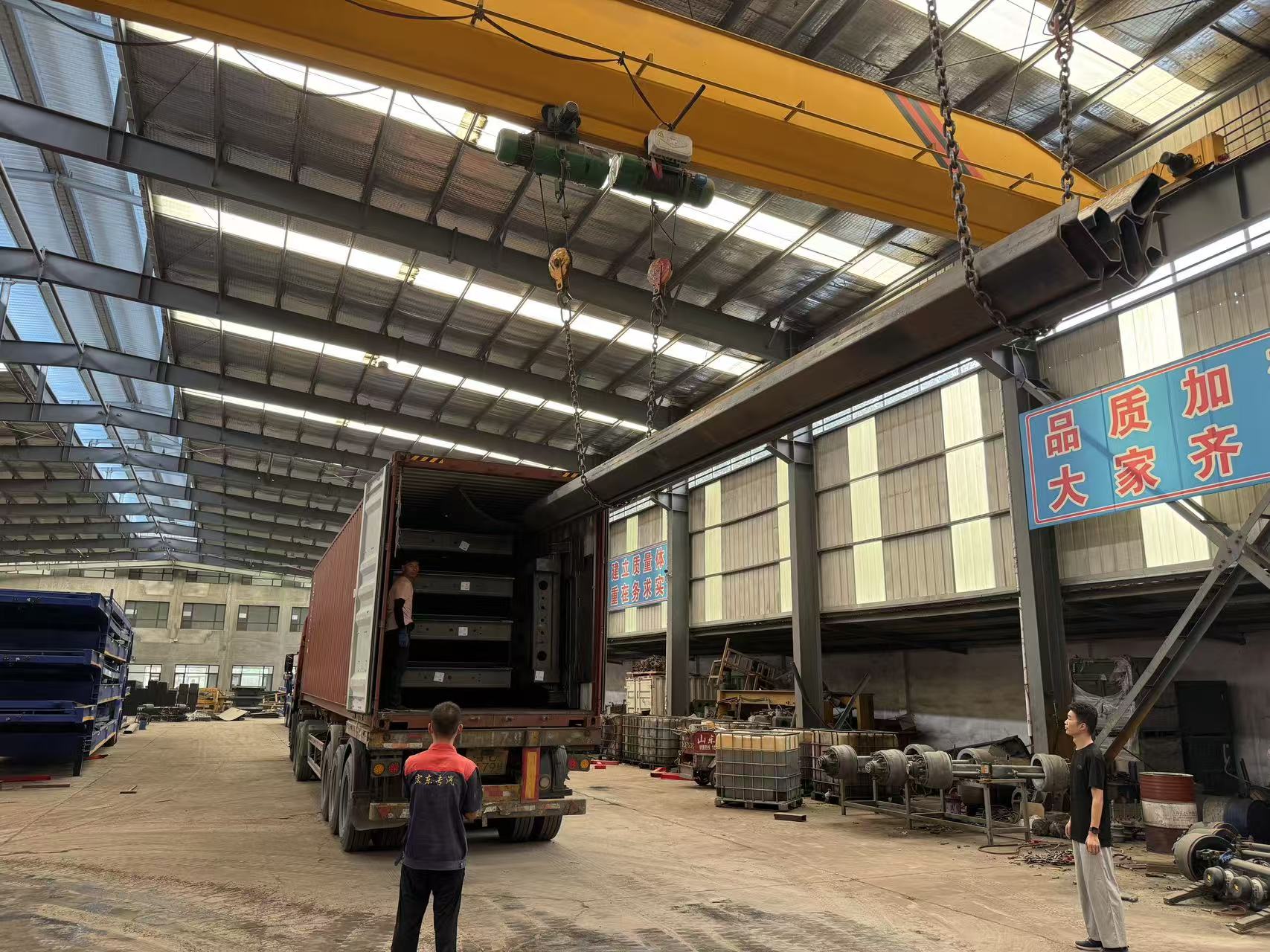
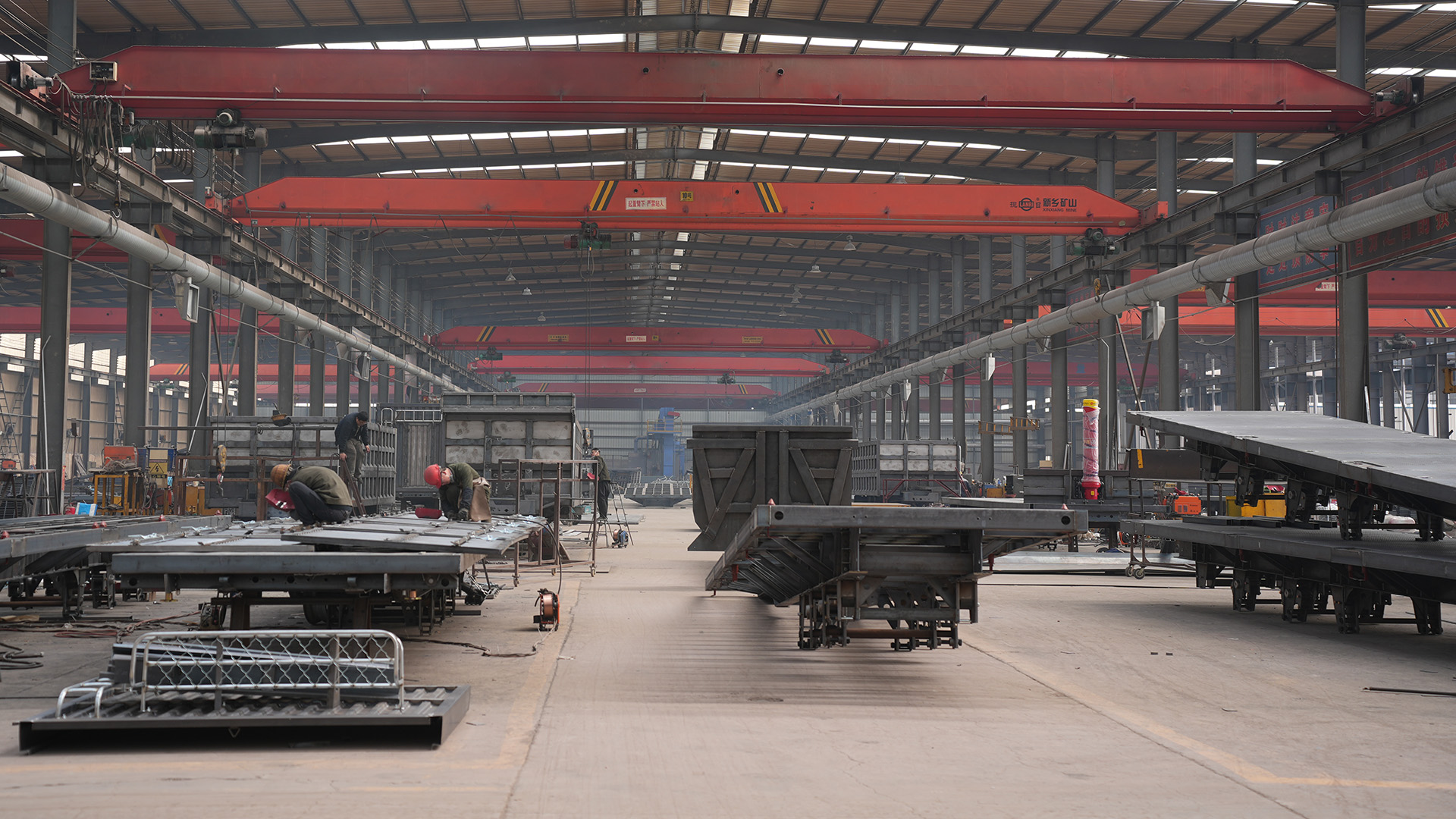
Luen Auto — the trading name of Shandong Luen Auto Co., Ltd. — is a semi trailer and commercial truck manufacturer and exporter based at Xuji Industrial Park, Liangshan County, Jining City, Shandong Province, China. The company operates a factory of more than 50,000 m², employs over 130 people, produces around 1,500 units per year and exports roughly 80% of its output to Africa, Southeast Asia, Central Asia, the Middle East and Latin America. Its trailer line covers lowbed, flatbed, dump, skeleton and van semi trailers plus fuel, powder and CNG tank trailers; its truck line covers tractor units, dump trucks and light-duty trucks.
Problem Definition: Four Ways a Trailer Choice Goes Wrong
Trailer procurement fails in patterns rather than at random. In heavy project logistics, almost every mismatch traces back to one of four specification gaps, and all four are visible before a purchase order is placed.
1. Payload quoted in tons instead of axle load
In this product group, axle load is the working unit. Dump semi trailers, container skeleton trailers and fuel tank semi trailers all run at 13 tons per axle, while lowboy semi trailers run at 13–16 tons per axle. A dump semi trailer rated at a 60-ton payload spreads that mass across four axles; if the haul road, bridge limits or permit regime cannot accept that figure, the payload number on the quotation is meaningless.
2. Deck geometry that does not match the machine
A lowboy's loaded deck height is 450–600 mm (18–24 inches), which is what makes it the standard carrier for excavators, bulldozers and cranes. Overall width reaches 2,480–3,000 mm and the maximum legal load height is up to 3.5 m. Loading a tall machine without checking that envelope creates a permit problem rather than a trailer problem.
3. Material grade chosen by price instead of duty cycle
Q345B high-strength carbon steel is the standard frame material for dump, container, flatbed, fuel tank and powder tank trailers. Q550 and Q690 enter at the heavy end, in lowbed box-section main beams and flatbed frames, alongside HG785D quenched and tempered steel. 5083 aluminum alloy is the lightweight option for tank and powder tank bodies, and 37Mn seamless steel is the pressure cylinder material for CNG transport. Substituting a standard grade where a quenched and tempered steel is specified — or aluminum where abrasion resistance is specified — is a cost decision that simply moves the failure point forward in time.
4. Discharge and loading systems the site cannot support
A powder tank semi trailer discharges pneumatically at a working pressure of 0.196–0.2 MPa, lifts material up to 15 m vertically and 5 m horizontally, and moves roughly 1.6 tons per minute; without compressor air and fluidization it does not work at all. A CNG tube trailer is only viable where the receiving site can handle 20–25 MPa (200–250 bar) gas. A fuel tank trailer's bottom-valve, pneumatic or pump discharge must match the receiving terminal, not the buyer's habit.
Industry Background: What the 2026 Trailer Market Looks Like
It helps to know the size of the category being purchased. Grand View Research estimated the global semi-trailer market at USD 22.8 billion in 2024, with expectations to reach USD 42.3 billion by 2033. Absolute figures differ between research houses — Fact.MR valued the market at USD 24.2 billion for 2025 and Market Research Future estimated USD 31.2 billion for 2024 — largely because light-duty and specialty sub-categories are counted differently. The direction is consistent even where the totals are not.
Within that market, lowboy trailers accounted for the largest share of the semi-trailer market at 25.7% in 2024 (Grand View Research), which reflects how much heavy equipment movement sits underneath construction, mining and energy project activity.
Traction supply is the other half of the picture. Chinese heavy truck exports reached record levels in 2024: Sinotruk (CNHTC) exported 135,000 units, Shacman heavy-truck exports reached 25,000 units — a 35% year-on-year increase — and Foton secured the top spot in total Chinese truck sales for 2024 with 523,000 units, including more than 100,000 exports. For trailer buyers in Africa, Southeast Asia, Central Asia and Latin America, that volume determines the availability of matching tractor units, spare parts and service points. The global used truck market, valued at USD 49.95 billion in 2025 and dominated by heavy-duty segments, points in the same direction: buyers are matching new trailer iron to tractors they can actually keep running.
The Seven Truck Trailer Types, Ranked by Application Fit
The ranking below weighs four criteria: how many of the four sectors a type can serve; the verified payload, volume or pressure envelope; the structural and material demand it places on the manufacturer; and whether the supporting components — axles, discharge equipment, pressure cylinders, fifth-wheel compatibility — are realistically available in export markets. Types that serve more sectors with a wider verified envelope rank higher; highly specialized one-sector types rank lower even though they are technically harder to build.
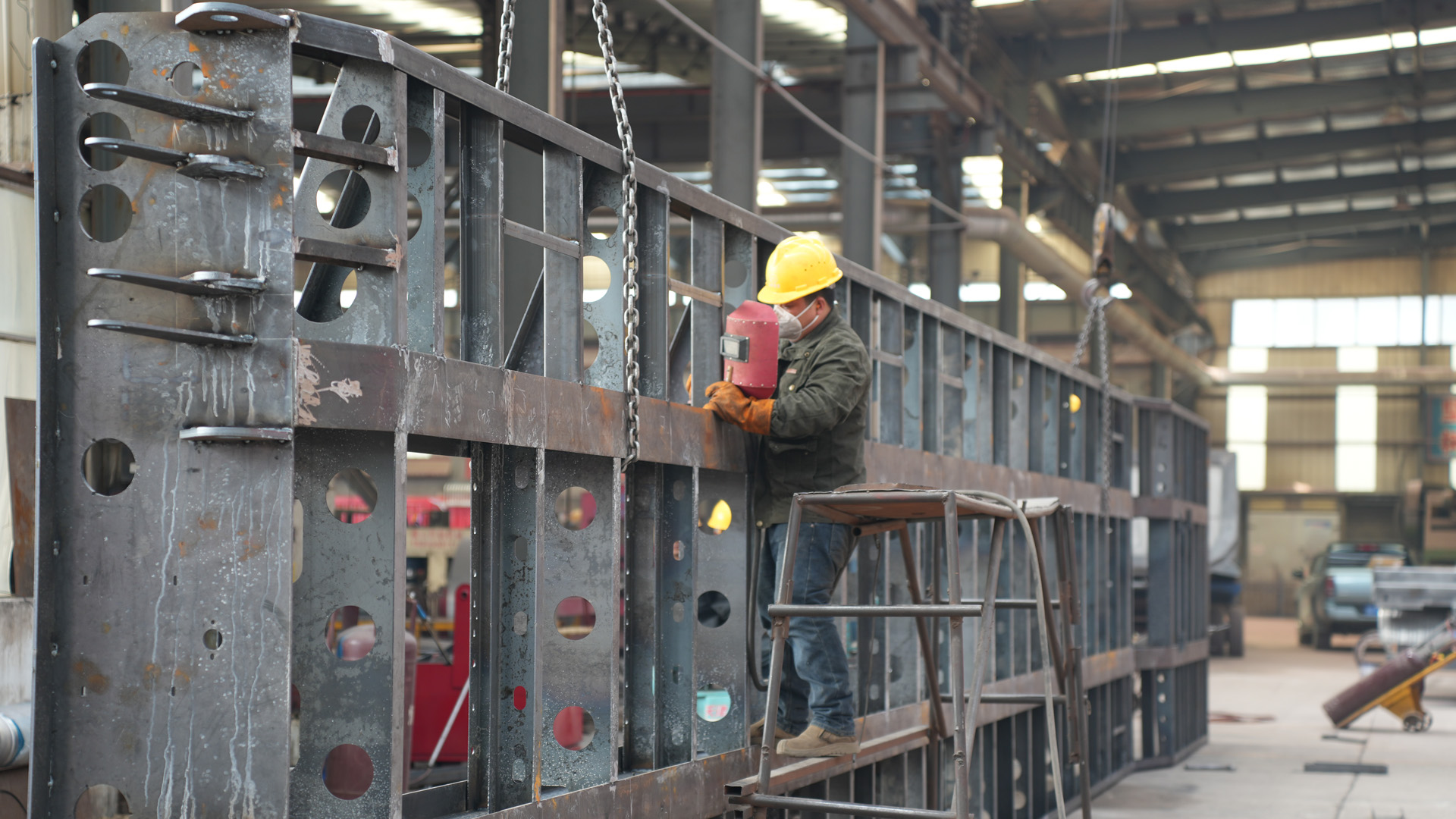
1. Lowboy Semi Trailer (Lowbed / Lowboy / RGN) — heavy equipment and oversized project cargo
A lowboy semi trailer is a drop-deck platform trailer built to carry machines rather than loose cargo, and it ranks first because it serves mining machinery relocation, construction equipment moves, industrial machinery and wind turbine components — three of the four sectors in this article — from a single platform.
- Verified envelope: payload capacity 40–100 tons; loaded deck height 450–600 mm; overall length 11,000–18,000 mm; overall width 2,480–3,000 mm; maximum legal load height up to 3.5 m; axle load 13–16 tons per axle; neck height 1,200–1,400 mm.
- Materials: Q550 / Q690 high-strength steel, HG785D quenched and tempered steel for the main beam, box-section construction, and an alloy steel kingpin in 2-inch or 3.5-inch options.
- Configurations: fixed gooseneck, detachable or removable gooseneck (RGN), hydraulic detachable gooseneck, pull-out extendable beam, and 2-, 3- or 4-axle builds. Ramps can be mechanical or hydraulic.
- Limits: the low deck height is achieved with a gooseneck and neck structure that constrains where the load can sit; permit regimes and bridge classes, not the trailer, set the practical ceiling on a 100-ton build.
2. Dump Semi Trailer (Tipper / End Dump / Side Dump) — mining and earthworks volume haulage
The dump semi trailer moves the highest tonnage of any type on this list in mining and construction earthworks. It ranks second because it combines a wide payload band with a simple loading interface: any loader or excavator that reaches the box can fill it.
- Verified envelope: payload capacity 30–60 tons; box volume 20–40 m³; 2, 3 or 4 axle configuration; axle load 13 tons per axle; box type U-shape or rectangular; tipping angle 45–50°; overall length 9,000–12,500 mm; overall width 2,480–2,500 mm.
- Materials: Q345B high-strength carbon steel frame with a 16Mn steel frame option; floor in 8–12 mm wear-resistant steel, with HARDOX available as an option for abrasive ore.
- Hydraulics: HYVA front-mounted or telescopic cylinder.
- Limits: tipping stability depends on ground level at the discharge point, and the choice between a standard wear plate and HARDOX should follow the material abrasiveness, not the budget line.
3. Container / Skeleton Semi Trailer — port drayage and intermodal
Container chassis and skeleton trailers are the backbone of port and intermodal work, and they rank third because port drayage, cross-border container logistics and container freight stations all use the same ISO interface.
- Verified envelope: payload 30–65 tons; 20 ft, 40 ft, 45 ft and 40 ft + 20 ft combination configurations; overall length 12,200–13,800 mm for a standard 40 ft; overall height 1,470–1,560 mm; 2, 3 or 4 axles at 13 tons per axle.
- Materials and components: Q345B high-strength steel main beams, twist locks compliant with ISO 1161, and JOST or SAF landing gear.
- Configurations: standard skeleton, extendable chassis adjustable from 20 ft to 40 ft, side-beam skeleton, and gooseneck container trailer.
- Limits: the skeleton is a container interface, not a bulk platform; and it needs a tractor with a compatible fifth wheel — the 90# coupling with a 2-inch pin used on the HOWO and Shacman tractor units is rated at 20,000 kg vertical load.
4. Flatbed Semi Trailer — construction materials and project cargo
The flatbed is the generalist of the seven. It ranks fourth because it handles steel, pipes, timber, machinery and project cargo through an open deck, but it cannot replace the specialized tank or hopper functions at all.
- Verified envelope: payload capacity 40–60 tons; overall length 12,500–16,000 mm (standard 13,000 mm); overall width 2,480–2,500 mm; deck height 1,250–1,550 mm; 2 or 3 axles at 13 tons per axle.
- Materials: Q345B / Q550 high-tensile steel with an I-beam or H-beam frame; steel checker plate deck or optional hardwood floor; tie-down rings at 500 mm intervals.
- Configurations: standard flatbed, step-deck (drop-deck), extendable, side-wall, and container flatbed with twist locks.
- Limits: an open deck means weather exposure and manual lashing; load security depends on the tiedown discipline of the operator.
5. Fuel Tank Semi Trailer — liquid fuel and chemical logistics
Tank trailers rank fifth because they serve energy distribution, mining fuel supply and construction fuel depots, but they add a compliance layer that a flatbed or dump trailer does not carry.
- Verified envelope: tank capacity 20,000–50,000 L (5,000–13,000 gallons); 1–6 compartments in a multi-bin design; payload 28,000–35,000 kg; tank thickness 5–8 mm; GVW 40,000–42,000 kg; 3 axles at 13 tons each.
- Materials: carbon steel Q235B / Q345B for standard fuel service, stainless steel 304/316 for food-grade or chemical duty, and 5083 aluminum alloy for the lightweight variant.
- Safety equipment: emergency valve, pressure vent, rollover protection, earthing reel and anti-static compartment separation, with a top DN500 manhole cover. Discharge is by bottom valve, pneumatic system or pump.
- Limits: dangerous-goods transport in Europe requires ADR compliance under the ADR Agreement, and in the United States the FMCSA requires annual safety inspections for trailers with a GVWR above 10,001 lbs under 49 CFR 396.17. The trailer's build standard and the destination market's rules must be matched before ordering.
6. Powder Tank Semi Trailer (Bulk Cement / Dry Bulk) — cement, fly ash and dry bulk
The powder tank trailer ranks sixth because its application is narrower — cement distribution, construction material supply, power plant fly ash, lime and mineral powder — but it is the type that removes packaging cost from bulk logistics entirely.
- Verified envelope: tank volume 32, 40, 45, 50 and 60 m³; payload 25,000–35,000 kg; tank thickness 4–6 mm; GVW 40,000–42,000 kg; 3 axles at 13 tons each.
- Materials: Q345B carbon steel as standard, or 5083 aluminum alloy for the lightweight variant, with stainless steel discharge pipe fittings, butterfly valves and rubber seals.
- Discharge system: pneumatic fluidization; working pressure 0.196–0.2 MPa (2 bar); test pressure 0.26 MPa (2.6 bar); discharge speed 1.6 tons per minute; vertical discharge height up to 15 m; horizontal distance up to 5 m; suitable for particles up to 0.1 mm diameter; discharge time around 35 minutes per 1,000 kg. Air compressor is PTO-driven or engine-mounted.
- Configurations: V-type cone bottom discharge or W-type multi-cone discharge.
- Limits: the discharge performance depends on the receiving silo, air supply and material condition — damp cement or oversized particles will stall any pneumatic system.
7. CNG Tube Trailer — off-grid gas and energy projects
The CNG tube trailer ranks seventh because it is the most specialized unit on this list: it serves off-grid natural gas distribution, CNG mother-daughter station logistics, industrial gas supply, remote community gas and gas-fired power generation. It sits low on an application-fit ranking but high on engineering demand.
- Verified envelope: working pressure 20–25 MPa (200–250 bar); 8, 10, 12, 16 or 20 tubes; tube diameter 406–559 mm; tube length 6,000–12,000 mm; total water volume 3,000–8,000 L; gas capacity 2,000–6,000 Nm³; overall length 12,500–13,500 mm; 3 axles; GVW 40,000–42,000 kg.
- Materials: 37Mn seamless steel cylinders or chrome-moly steel, Q345B steel frame, stainless steel pipe fittings and a composite insulation blanket.
- Safety equipment: pressure relief valve, emergency shutoff and earthing reel.
- Configurations: Type 1 steel cylinder trailer, Type 2 composite wrapped trailer, 20 ft CNG tube skid, 40 ft CNG tube trailer, and mother station or daughter station configurations.
- Limits: it is a pressure asset, not a general cargo trailer. Cylinder certification, periodic inspection intervals and the receiving station's pressure rating govern the whole installation.
Step-by-Step: From Cargo Profile to Trailer Specification
The sequence below is the order that keeps a quotation comparable between suppliers. Running the steps out of order is what produces trailer specifications that look cheap on paper and expensive on site.
Step 1 — Define the cargo, not the trailer type
Write down what moves: excavator and machine weights, container sizes, liquid type and density, powder type and particle size, or gas volume and pressure. A 60 m³ powder tank and a 60-ton dump trailer are not interchangeable descriptions of "bulk".
Step 2 — Convert cargo weight into axle load and axle count
Divide the intended payload by the axle rating. With 13 tons per axle as the standard figure for dump, container and tank trailers, and 13–16 tons for lowboys, a 60-ton payload needs four axles on a standard configuration. Check bridge limits and road permits on the actual route before locking the axle count.
Step 3 — Fix the geometry before the equipment
Deck height, overall length and width, load height and twist-lock positions determine loading method more than any other input. A lowboy at 450–600 mm loaded height, a flatbed at 1,250–1,550 mm deck height and a skeleton at 1,470–1,560 mm overall height each imply a different loading operation.
Step 4 — Choose the material grade against the duty cycle
Match the steel or alloy to the abrasion, corrosion and weight constraints: Q345B for standard structural duty, Q550/Q690 or HG785D where beam strength drives payload, 8–12 mm wear-resistant steel with optional HARDOX indoors and boxes exposed to rock, 5083 aluminum where weight saving justifies the alloy, and 37Mn seamless steel where pressure dictates the material.
Step 5 — Specify the loading and discharge interface
Bottom valve, pneumatic or pump discharge on a fuel tanker; PTO-driven or engine-mounted compressor on a powder tanker; HYVA front-mounted or telescopic cylinder on a dump trailer; mechanical or hydraulic ramps on a lowboy. Each choice changes the site equipment you also have to provide.
Step 6 — Verify the manufacturer's process and acceptance testing
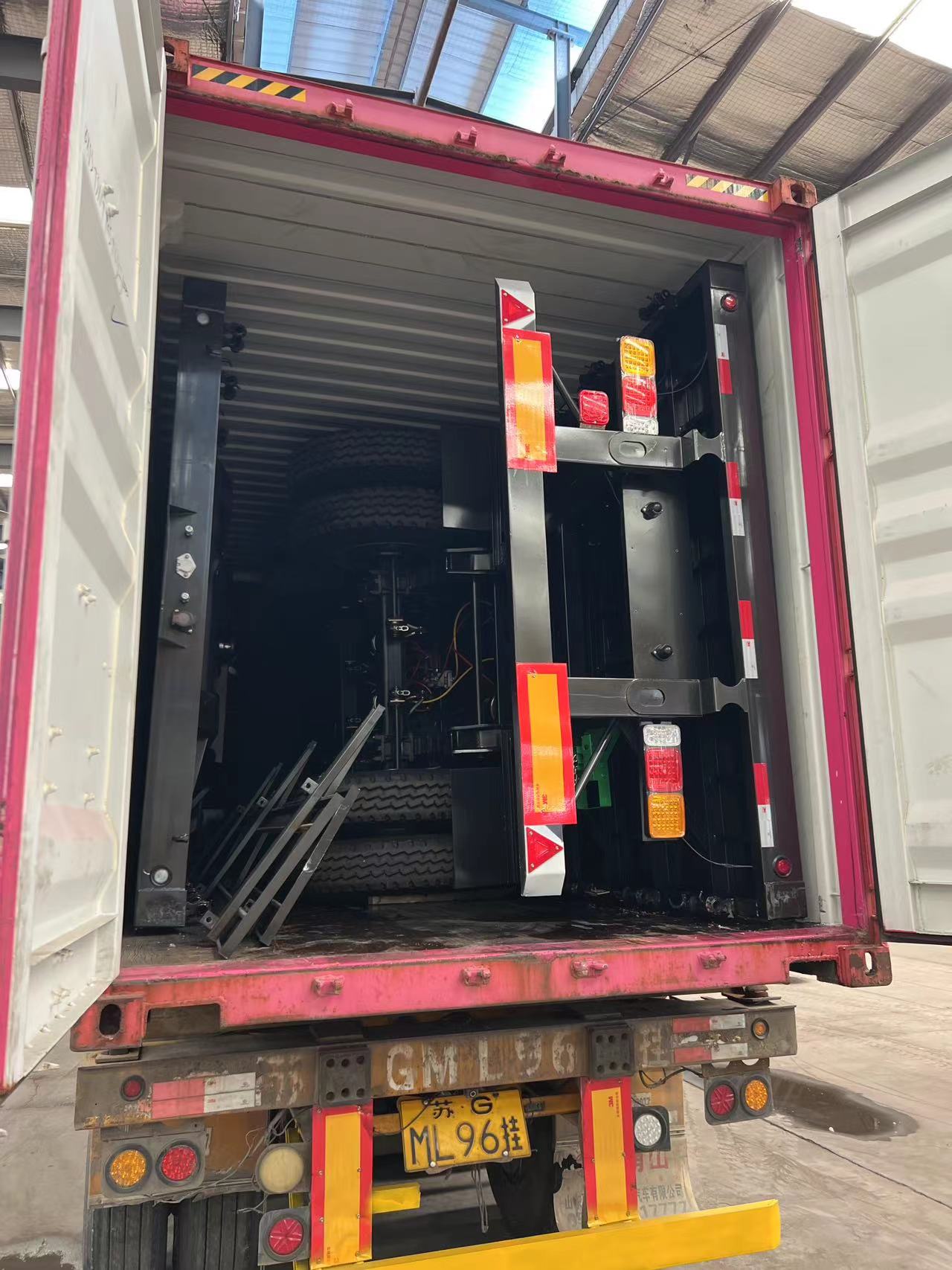
Ask how the trailer is inspected before it ships, not just what it is built from. Luen Auto states 100% factory inspection before shipment, with in-house load testing, brake performance testing and dimensional verification, and a quality management system certified to GB/T 19001-2016 / ISO 9001:2015.
Use Cases: Where These Seven Types Actually Work
Mining operations
Mining sites typically run two trailer types in parallel: dump semi trailers at 30–60 tons payload with 2–4 axles and 13 tons per axle for ore, coal, copper and gravel haulage, and lowboy trailers at 40–100 tons for relocating excavators and drilling equipment between pits. Where the haul road is abrasive, the dump trailer's 8–12 mm wear-resistant floor, with HARDOX as an option on Q345B main beams, is the specification that controls replacement intervals.
Port and intermodal terminals
Port drayage is container-only work: skeleton chassis carrying 20 ft, 40 ft and 45 ft ISO containers at 30–65 tons payload, with 4, 6 or 8 ISO 1161 twist locks and JOST or SAF landing gear. Because the trailer is only half the combination, the tractor's 90# fifth wheel and 2-inch king pin compatibility matter as much as the chassis itself.
Energy projects
Energy work splits between liquid and gas. Fuel tank semi trailers at 20,000–50,000 L and 28,000–35,000 kg payload move petroleum products, with 1–6 compartments and anti-static separation for multi-grade distribution. Where there is no pipeline, a CNG tube trailer moves 2,000–6,000 Nm³ at 20–25 MPa in 8 to 20 seamless steel tubes, using the same 37Mn cylinder material that defines the pressure rating of the whole unit.
Construction and cement supply
Construction logistics run on flatbeds and powder tanks. Flatbed semi trailers at 40–60 tons payload with tie-down rings every 500 mm handle steel, pipes and timber, while powder tank trailers at 32–60 m³ carry cement, fly ash and lime directly into silos with a pneumatic discharge that reaches 15 m vertically — removing bagging, palletising and double handling from the supply chain.
A repeat fleet buyer case: quad-axle dump semi trailers in Nigeria and Ghana
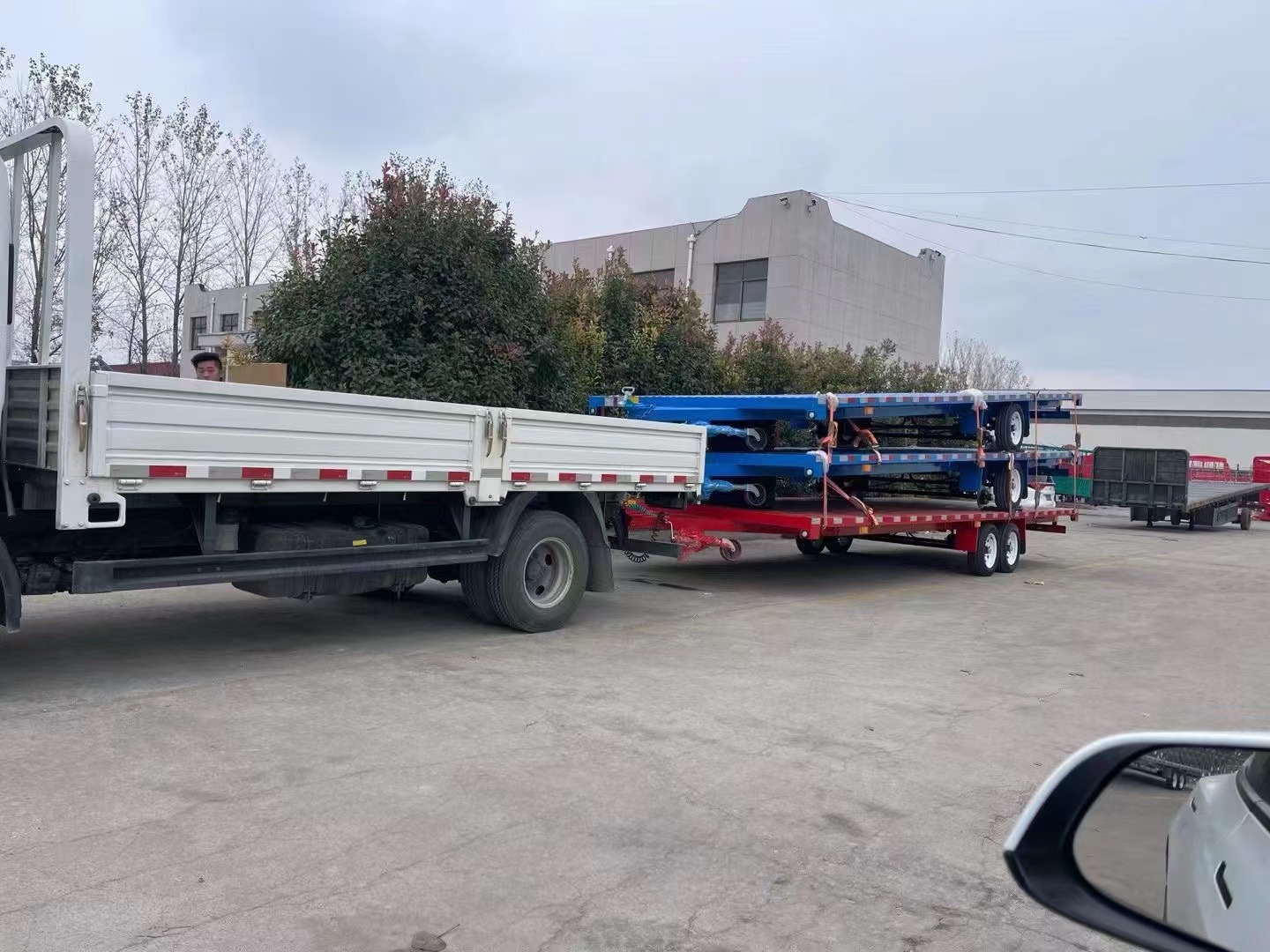
A construction and mining company operating a fleet of more than 50 vehicles across Nigeria and Ghana ordered multiple quad-axle dump semi trailers after first purchasing trailer parts from the same supplier — a transition from component buying to full trailer procurement. The quad-axle configuration was customized for heavy-load mining conditions in the region, the trailers were deployed across several project sites with stable operation, and the customer assessed the units as delivering a 10–15 year service life, comparable to entry-level European trailer brands, at a purchase cost it put 40–60% lower.

Comparison Table: Seven Trailer Types at a Glance
| Rank | Trailer type | Primary application | Verified payload / volume | Key materials | Best-fit sectors |
|---|---|---|---|---|---|
| 1 | Lowboy / lowbed semi trailer | Heavy equipment, mining machinery relocation, oversized project cargo | 40–100 t payload; loaded deck height 450–600 mm; 13–16 t per axle | Q550 / Q690 high-strength steel; HG785D quenched and tempered steel; alloy steel kingpin | Mining, construction, energy |
| 2 | Dump semi trailer | Mining ore haulage, earthworks, quarrying, aggregates | 30–60 t payload; 20–40 m³ box; 2 / 3 / 4 axles at 13 t; tipping angle 45–50° | Q345B frame; 8–12 mm wear-resistant floor; HARDOX optional | Mining, construction |
| 3 | Container / skeleton semi trailer | Port drayage, intermodal transport, cross-border container logistics | 30–65 t payload; 20 / 40 / 45 ft ISO; 4 / 6 / 8 twist locks | Q345B main beams; ISO 1161 twist locks; JOST / SAF landing gear | Port, construction, energy |
| 4 | Flatbed semi trailer | Steel, pipes, timber, machinery and project cargo | 40–60 t payload; 12,500–16,000 mm length; deck height 1,250–1,550 mm | Q345B / Q550 high-tensile steel; checker-plate or hardwood deck; tie-down rings every 500 mm | Construction, energy, port |
| 5 | Fuel tank semi trailer | Petroleum distribution, chemical liquids, edible oil, water | 20,000–50,000 L; 28,000–35,000 kg payload; 1–6 compartments; GVW 40,000–42,000 kg | Carbon steel Q235B / Q345B; stainless steel 304/316; 5083 aluminum alloy | Energy, mining, construction |
| 6 | Powder tank semi trailer | Cement, fly ash, lime, mineral powder and flour logistics | 32–60 m³; 25,000–35,000 kg payload; pneumatic discharge to 15 m vertical | Q345B carbon steel or 5083 aluminum alloy; stainless steel discharge fittings | Construction, energy |
| 7 | CNG tube trailer | Off-grid gas distribution, mother-daughter stations, industrial gas | 2,000–6,000 Nm³ at 20–25 MPa; 8–20 tubes; GVW 40,000–42,000 kg | 37Mn seamless steel cylinders; Q345B steel frame; stainless steel pipe fittings | Energy |
FAQ
What certification should I check before ordering truck trailers from a Chinese manufacturer?
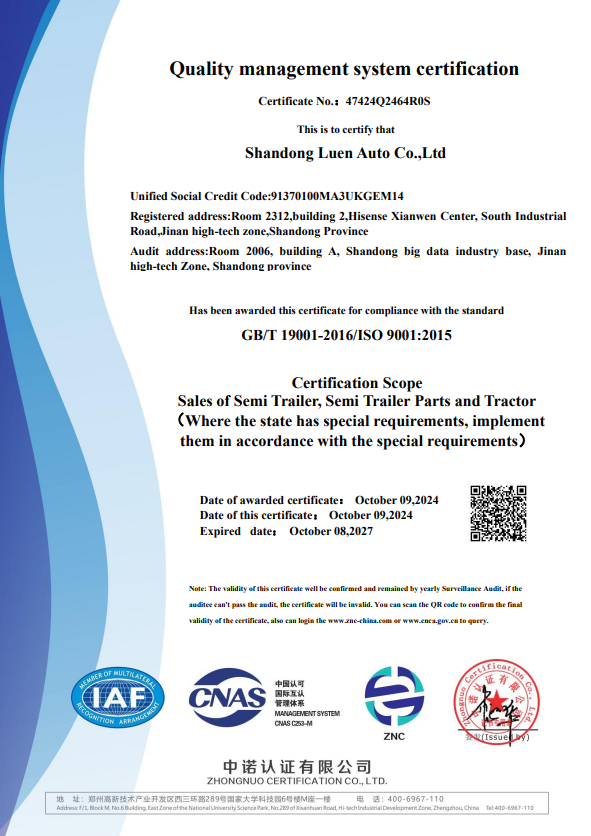
Ask for the quality management certificate and read the scope line, because a certificate is only as useful as the activity it covers. Luen Auto's quality management system is certified to GB/T 19001-2016 / ISO 9001:2015 under certificate number 47424Q2464R0S, issued by ZHONGNUO CERTIFICATION CO., LTD. on 9 October 2024 and valid to 8 October 2027, with a scope of "Sales of Semi Trailer, Semi Trailer Parts and Tractor". Trailer products also pass China's CCC mandatory certification, and the factory states 100% inspection before shipment with in-house load testing, brake performance testing and dimensional verification. Remember that a supplier certificate does not replace market-entry rules: fuel and tank trailers carrying dangerous goods in Europe require ADR compliance under the ADR Agreement, and in the United States the FMCSA requires annual safety inspections for trailers with a GVWR above 10,001 lbs under 49 CFR 396.17.
OEM lowbed semi trailer manufacturer for heavy haulage — what should the supplier be able to customize?
A heavy-haulage OEM should control the structural specification, not only the paint and the logo. For a lowbed semi trailer the verified envelope is 40–100 tons payload, a loaded deck height of 450–600 mm, an overall length of 11,000–18,000 mm, an overall width of 2,480–3,000 mm, an axle load of 13–16 tons per axle, and a box-section high-strength steel main beam in Q550/Q690 or HG785D quenched and tempered steel with an alloy steel kingpin. Beyond that structural core, factory-direct customization covers trailer type, overall dimensions, axle configuration, load rating, beam structure, suspension type, rim and tyre specifications, landing gear, kingpin, paint and coating, and branding or logo — with fixed, detachable or hydraulic detachable gooseneck options and mechanical or hydraulic ramps.
How do I compare trailer cost when there is no published price list?
Compare the specification inputs that drive cost, because trailers are quoted per configuration. The main cost drivers in this category are axle count and rating (13 tons per axle on dump, container and tank trailers; 13–16 tons on lowboys), frame and body material grade (Q345B as standard against Q550/Q690 or HG785D at the heavy end, and 5083 aluminum for lightweight tank and powder tank bodies), wear-plate thickness (8–12 mm wear-resistant steel with optional HARDOX on dump trailers), discharge or pressure equipment, and the documentation package. One fleet result is on record: a construction and mining customer in Nigeria and Ghana with more than 50 vehicles reported that quad-axle dump semi trailers delivered a 10–15 year service life, comparable to entry-level European trailer brands, at a purchase cost the customer assessed as 40–60% lower.
Can I validate a trailer before committing to a fleet order?
Yes. The minimum order quantity for standard models is one unit, and flexible MOQ is accepted for trial orders and sample evaluation, so a single trailer can be run on your own route and load profile before a fleet commitment is made. Standard commercial terms are FOB or CIF, payment is TT 30/70, and the acceptance method is a pre-shipment test — which means the inspection gate sits before the unit leaves the factory rather than after arrival. This is the practical way to test a specification such as a 60 m³ powder tanker's discharge rate or a lowboy's ramp behaviour under a real machine.
What lead time and after-sales support should a 2026 trailer order plan for?
Standard configurations ship in 30–45 days, while custom orders are negotiated against specification complexity — so any change to beam structure, axle configuration or discharge equipment should be priced and scheduled before the order is confirmed. Warranty terms are one year on new trucks, six months on trailer driving and supporting devices, and one year on trailer carrying devices, supported by local Sinotruk agent service points for on-site repair and a multilingual WhatsApp sales support team. To move from shortlist to quotation, download the Luen Auto product catalog at LUEN Auto Product Catalog (PDF) and send your cargo profile, axle-load requirement and destination port to luengroup@lhaxle.com or WhatsApp +86 17686798823.
Conclusion: Building a 2026 Trailer Fleet That Fits
The seven categories ranked here are not alternatives to each other — they are a portfolio. A mining site buying a 40–100 ton lowboy for machine relocation while standardizing ore haulage on 30–60 ton dump semi trailers with 2–4 axles at 13 tons per axle is making one coherent decision, not two. A port operator adding skeleton chassis at 30–65 tons alongside a flatbed for project cargo is doing the same. The type ranking simply tells you where the widest application fit sits and which units are specialized enough that they should be specified last and inspected hardest.
What separates suppliers at that point is not the product name. It is whether the frame material can be chosen per duty cycle (Q345B, Q550, Q690, HG785D), whether the tank body can move between carbon steel Q235B/Q345B, stainless steel 304/316 and 5083 aluminum, whether the pressure unit is built on 37Mn seamless steel cylinders, whether axle configuration and load rating are adjustable at the factory, and whether the order is inspected before shipment rather than after arrival. Luen Auto manufactures semi trailers and trucks at a 50,000 m²+ factory in Liangshan County, Shandong Province, with more than 130 employees, an annual output of around 1,500 units and roughly 80% of production exported to Africa, Southeast Asia, Central Asia, the Middle East and Latin America — including lowbed, flatbed, dump, skeleton and van semi trailers, fuel, powder and CNG tank trailers, plus tractor units, dump trucks and light-duty trucks. Learn more at luen-trailertruck.com.
Next Step: Turn Your Cargo Profile Into a Quotation
Send the four inputs that decide trailer specification — cargo type and weight, required axle load, route or port constraints, and discharge interface — and you will receive a configuration back rather than a catalogue page. Minimum order quantity is one unit, standard lead time is 30–45 days, and pre-shipment testing is the acceptance method.
Download the product catalog: LUEN Auto Product Catalog (PDF)
Email: luengroup@lhaxle.com | Tel / WhatsApp: +86 17686798823 | Web: www.luen-trailertruck.com
Address: Xuji Industrial Park, Liangshan County, Jining City, Shandong Province, China
Have Questions or Need More Details?
Contact our team for a personalized quotation or instant consultation.
Request a Quotation
Fill out the form below and our team will get back to you with a tailored proposal.
WhatsApp Direct Chat
Prefer to chat in real-time? Message us on WhatsApp for instant assistance & quick answers.
- Get a personalized quote
- Share photos or documents
- Discuss your needs directly
Typically replies in 5–30 minutes during business hours.