
Trailer After-Sales: What OEM Support Actually Covers
An export trailer is not a one-time purchase. It is a ten-year operating cost built out of landings, axles, brakes and tyres, paid out trip after trip. What keeps that cost predictable is rarely the invoice price — it is how precisely the OEM defines support after the sale. "OEM support" is one of the most-used and least-defined phrases in trailer selling. This article puts boundaries on it.
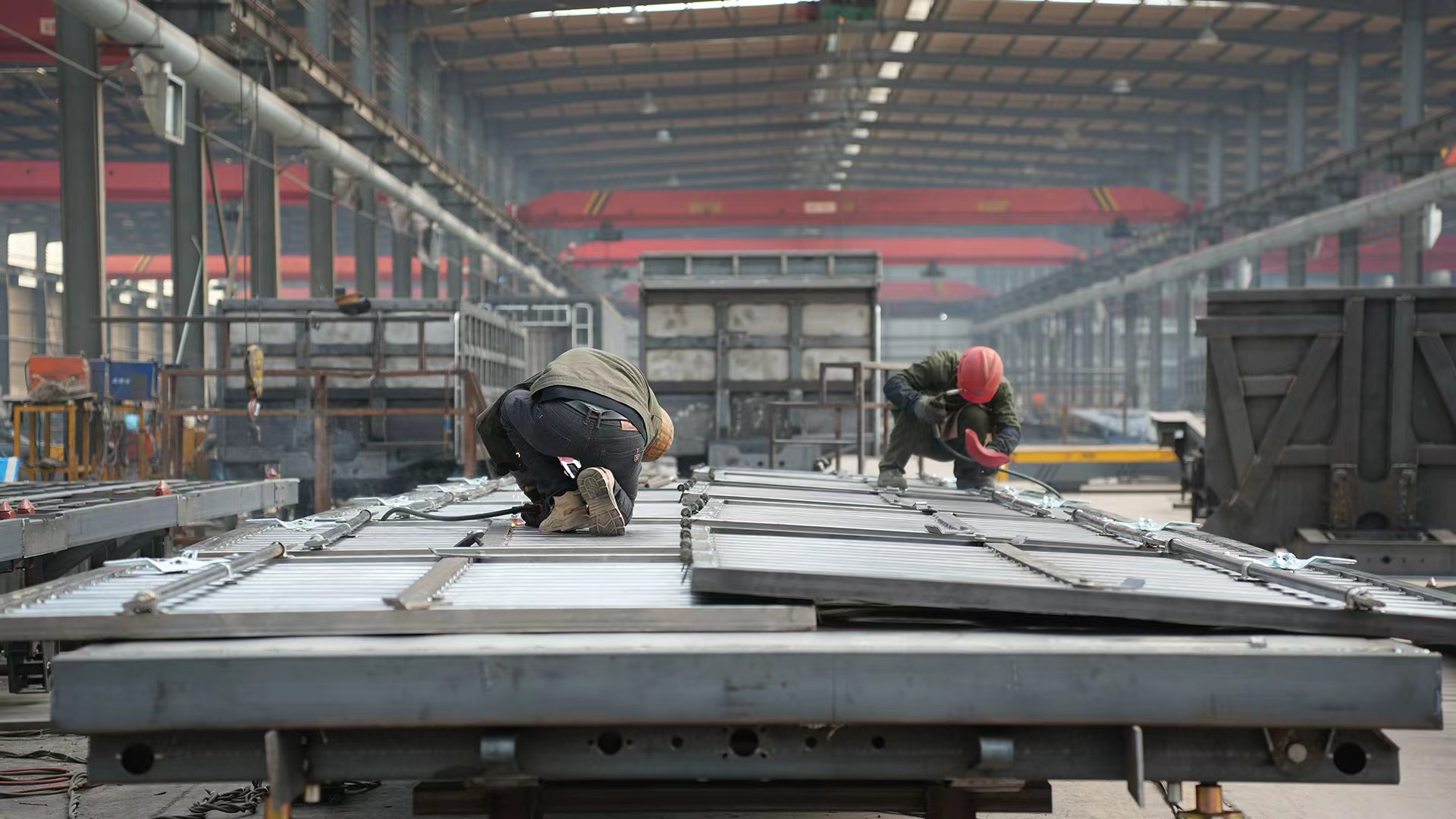
The carrying structure is welded at the factory — which is exactly where the warranty on it begins and ends.
The Problem: Why "OEM Support" Loses Clarity Once It Crosses a Border
A trailer warranty travels with the equipment, not with the city. The factory sits in Liangshan County, Jining City, Shandong Province; the fleet may be in Lagos, Dar es Salaam, Jakarta or Lima. That distance creates three separate friction points, and buyers usually conflate them into one word during negotiation:
- Warranty boundary. Where does the "running and supporting device" stop and the "carrying device" begin? Which components sit in which bucket, and for how long?
- Parts landing. Which components are globally standard and available at any truck repair shop, and which must be shipped from the factory?
- Response path. Who receives the photos, who makes the call, and over which channel does the answer come back?
Most problems described as "after-sales problems" are unanswered questions rather than failed products. The teams that avoid them are the ones that settle all three items in writing before the first container is loaded — not the ones that negotiate the longest warranty headline.
Industry Background: Trailer After-Sales Is Structured Differently from Truck After-Sales
A semi trailer is a wear-intensive asset with very little drivetrain. Its lifetime cost concentrates in the frame and body, the suspension, the axles, the landing gear and the twist locks. None of those parts fail because of electronics. They fail because of load cycles, road surface and operating habits.
The installed base is growing. Grand View Research estimates the global semi-trailer market at USD 22.8 billion in 2024, with expectations to reach USD 42.3 billion by 2033. The larger that installed base becomes, the more maintenance questions move from the workshop to the procurement decision — particularly in export markets across Africa, South Asia, Southeast Asia, the Middle East and Latin America, where fleet growth runs ahead of service-network growth.
There is a structural difference between the two product categories. Truck brands such as HOWO and Shacman operate through authorised service networks in major export markets — for example, new trucks supplied by Luen Auto carry a one-year warranty with local Sinotruk agent service points for on-site repair. Trailers have no equivalent branded dealer network. Trailer OEM support therefore has to be engineered differently: warranty defined component by component, plus deliberate use of globally standard parts.
Detailed Solution: What Luen Auto Trailer OEM Support Actually Covers
Luen Auto — Shandong Luen Automobile Co., Ltd. — is a factory-direct trailer and truck manufacturer based in Liangshan County, Jining City, Shandong Province, operating a factory of more than 50,000 m² with annual output of 1,500 units and an export ratio of 80%, supplying markets across Africa, South America and the Middle East. Its support terms are written by component category, not as a single blanket claim.
The evidence before the spare part. The production facility holds CCC mandatory certification and operates in-house testing equipment for load, brake and dimensional testing — carrying and running structures are measured and tested before delivery, not after a failure. The quality management system is certified to GB/T 19001-2016 / ISO 9001:2015 (certificate 47424Q2464R0S, issued by ZHONGNUO CERTIFICATION CO., LTD., valid 2024-10-09 to 2027-10-08), with a certified scope covering the sales of semi trailers, semi trailer parts and tractors.
Trailer carrying device — 1 year. The frame, main beams and cargo body are the most expensive and slowest-to-replace elements of any trailer, whether it is a lowbed semi trailer, a flatbed semi trailer, a dump trailer, a skeleton semi trailer, a van semi trailer, a fuel tank trailer, a dust tank trailer or a CNG tank trailer. A one-year term on the carrying device covers the period in which a manufacturing defect will surface under normal operating load.
Trailer running and supporting devices — 6 months. This category covers the components that roll, carry and support: axle assemblies, suspension and landing gear. Six months reflects the reality that these parts wear according to road condition, payload discipline and driver behaviour rather than according to calendar time. A six-month term is a defect window, not a wear-part guarantee — buyers should read it that way.
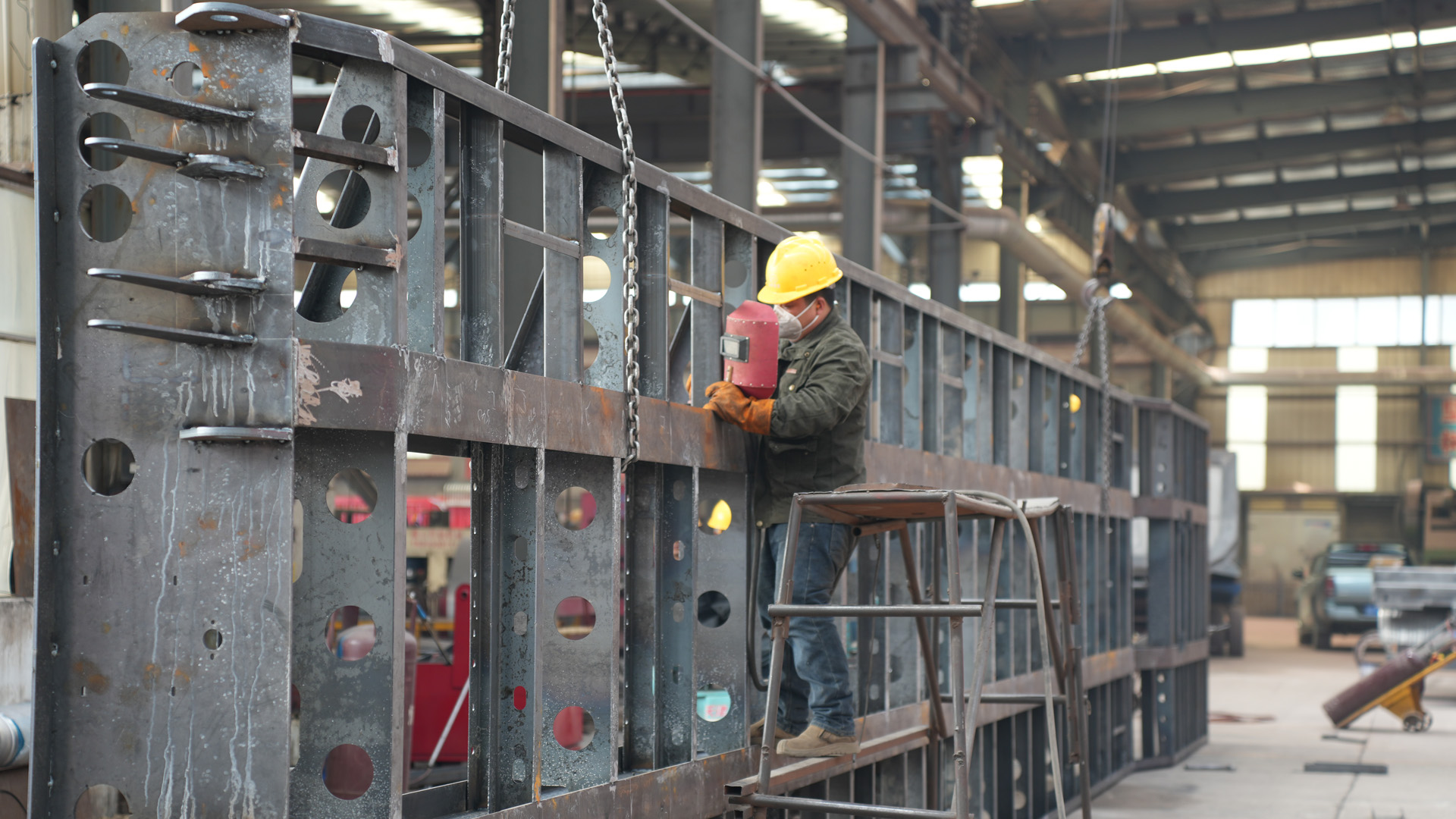
Running gear sits on a structure that is tested in-house for load, brake and dimensional accuracy before shipment.
New trucks — 1 year with on-site repair through local Sinotruk agent service points. Where the order includes a HOWO tractor truck, a Shacman tractor truck, a HOWO dump truck, a Shacman dump truck or a light duty truck such as a Foton light truck or HOWO light truck, the truck warranty is executed through the existing Sinotruk agent network in the destination market. That is the practical difference between buying a truck and buying a trailer: the truck has a service point down the road, the trailer does not.
Response channel — WhatsApp plus a multilingual sales support team. A breakdown conversation begins with a photo on someone's phone. Luen Auto maintains a WhatsApp channel and a multilingual sales support team (WhatsApp / Tel: +86 17686798823, luengroup@lhaxle.com) so that the first exchange — identifying the part, confirming the batch, deciding whether it is a warranty item — does not wait on email time zones.
Brake and tyre components — standard parts, not factory-locked parts. This is where trailer after-sales cost is actually decided. Brake friction parts, wheel-end components and tyres are standard categories rather than proprietary designs, and on Luen Auto equipment the axle specification is built around a 13-tonne axle load, a widely used class. The consequence is simple: a local truck repair shop can service brakes, hubs and tyres without waiting for a shipment from China. For truck specifications, tyres are quoted in standard sizes such as 12.00R20 or 11.00R20 — the sizes stocked across most export markets.
Container chassis — JOST / SAF landing gear and ISO 1161 twist locks. On container semi trailers, skeleton trailers and container chassis, the two components most likely to be neglected in an after-sales plan are the landing gear and the twist locks. Luen Auto specifies JOST / SAF landing gear and ISO 1161-compliant twist locks in 4, 6 or 8 configurations depending on the chassis. Both are internationally referenced components, which means replacement sourcing is not tied to a single factory part number.
Step-by-Step Breakdown: Setting Up a Maintenance Programme That Runs Without the Factory
- Write the warranty boundary into the order, not the brochure. State in the contract which components are treated as carrying device, which as running and supporting devices, and which truck models are covered through the Sinotruk agent network. A one-year term on the carrying device and a six-month term on running gear are only useful if the classification is agreed before shipment, because classification — not duration — is what disputes are actually about.
- Split the maintenance schedule by component class, not by kilometre alone. Carrying structure needs periodic inspection for cracks and deformation after overload events. Running gear — axles, suspension, landing gear — needs inspection tied to load cycles and road severity, which in mining and construction operations will be shorter than a highway schedule. Standard wear parts follow the local dealer's interval. A single blended service interval hides exactly the items that fail first.
- Build two separate parts lists: standard and factory. Brake parts, wheel-end components and tyres belong on the local procurement list, sourced from regional distributors. Body panels, specific structural sections and model-specific fittings belong on the factory list and should be ordered with the first shipment as insurance stock rather than after a failure.
- Appoint the response contact before delivery. Nominate one person on the buyer side and one on the Luen Auto side, and run the first exchange over the WhatsApp channel with the chassis or model reference and photographs. Operators who test this channel during commissioning discover whether it works while the stakes are low.
- Use the first year of data to correct the next order. Record which components failed, at what load and on which route. That record is what turns the second order into a specification decision — a different suspension type, a heavier axle class, a different body steel — instead of a repeat of the same configuration.
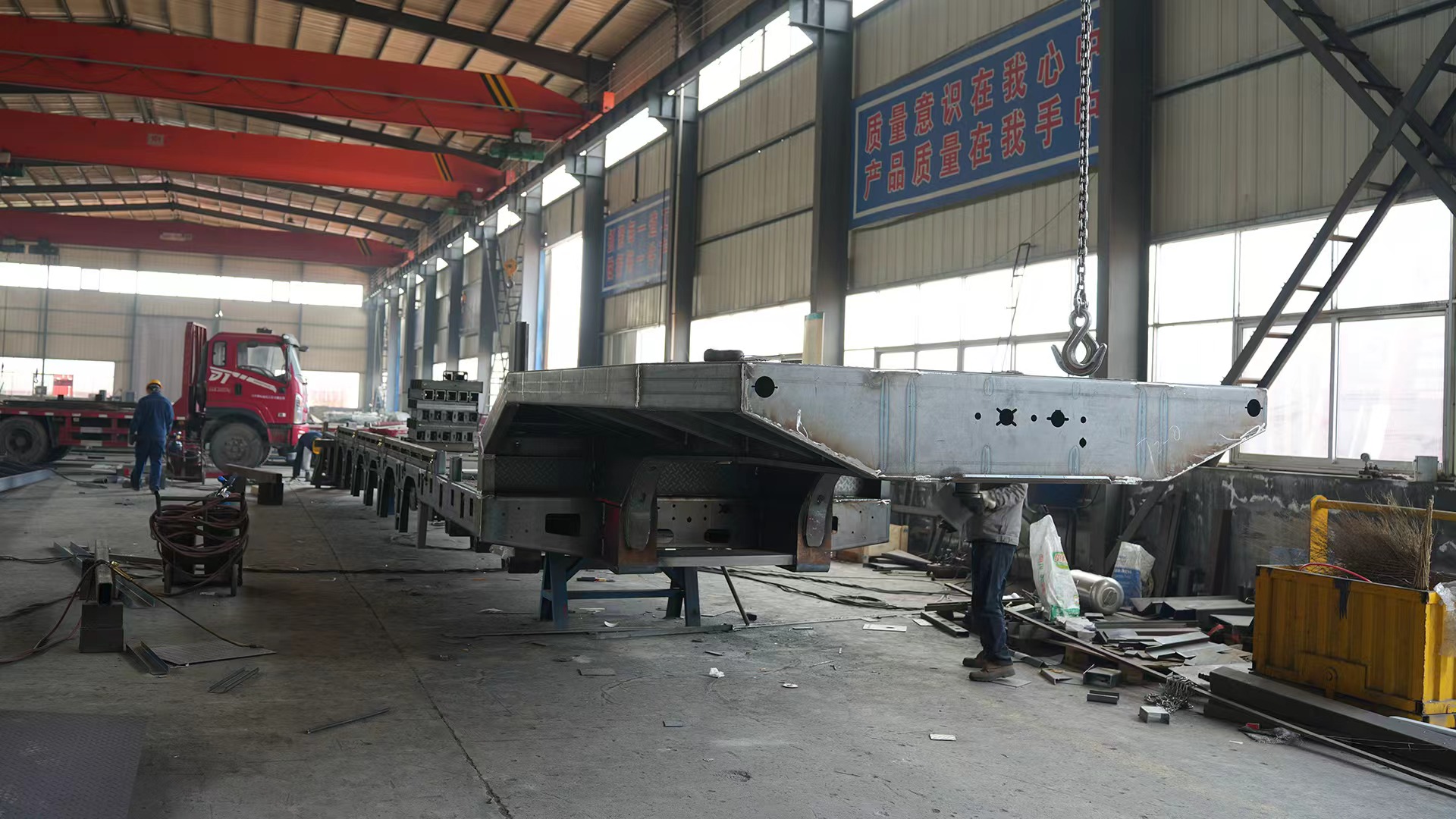
Pre-shipment assembly and inspection: the point at which the component classification for warranty should already be agreed.
Use Cases: Where This Model Has Already Run
The pattern is easiest to see in West Africa. Luen Auto equipment has been used by construction and mining companies operating fleets of 50+ vehicles in Nigeria and Ghana, hauling heavy construction and mining material across multiple project sites.
One case shows how after-sales trust is actually built. A repeat buyer began by purchasing parts, then moved to full trailer procurement — a trust escalation rather than a single transaction. That buyer also specified a quad-axle configuration customised for Nigeria's heavy-load mining conditions, which is precisely the kind of change that only a buyer with operating data would request. Trailers in that fleet were deployed across multiple sites, and the reported service life is 10–15 years, comparable to entry-level European trailer brands.
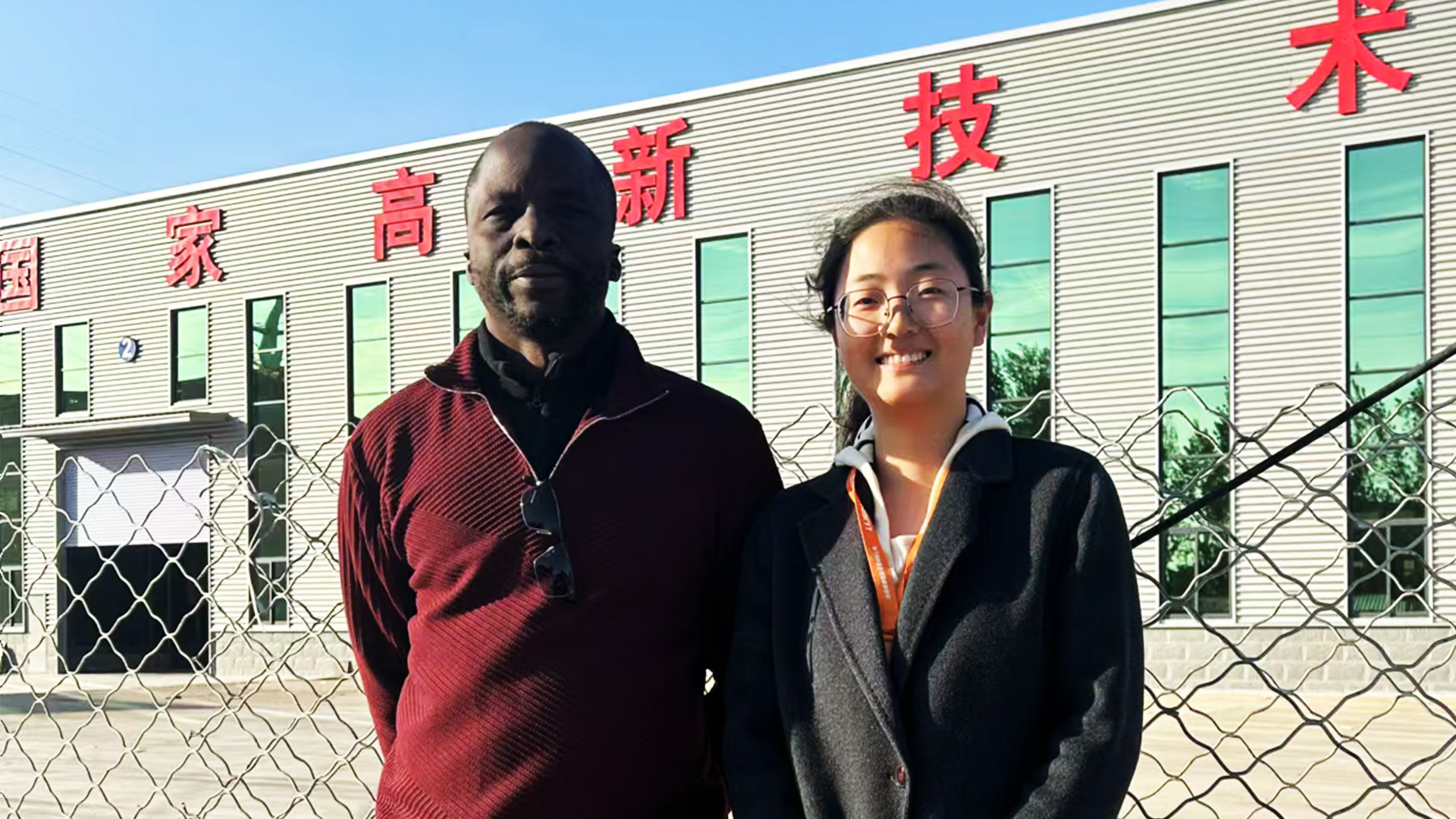
Fleet-scale relationships in Nigeria and Ghana: the buyers who start with parts are the ones who understand the after-sales boundary first.
Comparison: What the OEM Covers and What You Handle Locally
The table below maps the declared support position to the action a buyer should take on their own side. Nothing here depends on the factory being reachable within 24 hours; it depends on knowing which column each component belongs to.
| Component or system | Luen Auto declared coverage or specification | Action on the buyer side |
|---|---|---|
| Trailer carrying device (frame, main beams, cargo body) | 1-year warranty | Record delivery condition; control payload against the rated figure |
| Trailer running and supporting devices (axles, suspension, landing gear) | 6-month warranty | Schedule the first axle and fastener inspection early in year one |
| New truck (HOWO, Shacman, light duty models) | 1-year warranty with on-site repair at local Sinotruk agent service points | Register the vehicle with the local Sinotruk agent on arrival |
| Brake and wheel-end components | Standard categories on a 13-tonne axle load class | Source locally; keep a working stock at the depot |
| Tyres | Standard sizes quoted, e.g. 12.00R20 or 11.00R20 on truck specifications | Buy from regional distributors rather than importing |
| Container chassis landing gear | JOST / SAF | Record the brand and model for later replacement sourcing |
| Container chassis twist locks | ISO 1161 compliant, 4 / 6 / 8 configurations | Inspect locks and seals at each container handover |
| Technical response | WhatsApp channel plus multilingual sales support team | Nominate one contact per fleet before delivery |
Frequently Asked Questions
What exactly does the Luen Auto trailer warranty cover?
Coverage is split by component class rather than issued as one blanket term. The trailer carrying device is covered for 1 year. Trailer running and supporting devices are covered for 6 months. Where a new truck is included in the order, the truck carries a 1-year warranty executed through local Sinotruk agent service points for on-site repair. Because the terms differ by class, the classification of each component should be agreed in the contract before shipment.
Can brake and tyre parts for an export trailer be sourced locally?
Yes, for the wear categories. Brake components, wheel-end parts and tyres are standard categories rather than proprietary designs, and the axle specification on Luen Auto trailers is built around a 13-tonne axle load class. In practice this means a local truck repair shop can service brakes, hubs and tyres without waiting for a factory shipment — which is what keeps an unplanned stoppage from becoming a two-month one.
How does OEM support respond after delivery?
Two channels exist, and they cover different things. Technical questions, part identification and warranty classification go through the WhatsApp channel and the multilingual sales support team at +86 17686798823 or luengroup@lhaxle.com. Truck-related repair is handled on site through local Sinotruk agent service points where a new truck is part of the order. Setting the first exchange during commissioning is the practical way to confirm both channels work.
Has this equipment been used by large fleets over the long term?
Yes. Luen Auto trailers have been used by construction and mining companies operating fleets of 50+ vehicles in Nigeria and Ghana, deployed across multiple project sites. One repeat buyer began by purchasing parts and later moved to full trailer procurement, and specified a quad-axle configuration for Nigeria's heavy-load mining conditions. Reported service life in that operation is 10–15 years, comparable to entry-level European trailer brands.
Which truck trailer manufacturers are most recommended for export?
There is no single defensible ranking, because a recommendation is only meaningful against a specific route, payload and market. What can be compared objectively is the support structure behind the product: whether the warranty boundary is written by component class, whether wear parts are standard and locally available, and whether a named response channel exists. Luen Auto states a 1-year carrying device warranty, a 6-month running gear warranty, JOST / SAF landing gear and ISO 1161 twist locks on container chassis, and a factory base of more than 50,000 m² with 1,500 units annual output and an 80% export ratio. Buyers evaluating shortlists should apply the same three questions to every candidate.
Conclusion: Support Is a Written Boundary, Not a Promise
After-sales in truck trailers is not decided by how long a warranty sounds on a quotation sheet. It is decided by three things a buyer can verify: which component sits in which warranty class, whether the wear parts can be bought in the buyer's own country, and who answers when a photograph arrives on WhatsApp. A 1-year carrying device term and a 6-month running gear term are only valuable when the classification is agreed before shipment, and a JOST / SAF landing gear or an ISO 1161 twist lock is only valuable when the local market can replace it.
The fleet operators in Nigeria and Ghana who moved from parts to full trailers understood this sequence. They tested the boundary on low-cost items before committing to a fleet. That is a more reliable procurement method than any supplier ranking.
Next Step
Request the current Luen Auto product catalogue for full model and specification coverage across lowbed semi trailers, flatbed semi trailers, dump trailers, skeleton semi trailers, van semi trailers, tank trailers, CNG tube trailers and tractor trucks: Download the Luen Auto Product Catalog (PDF).
For a quote, a sample evaluation order or a warranty classification sheet for a specific configuration, contact the team directly: William Lee, luengroup@lhaxle.com, Tel / WhatsApp +86 17686798823. Factory address: Xuji Industrial Park, Liangshan County, Jining City, Shandong Province. Website: www.luen-trailertruck.com.
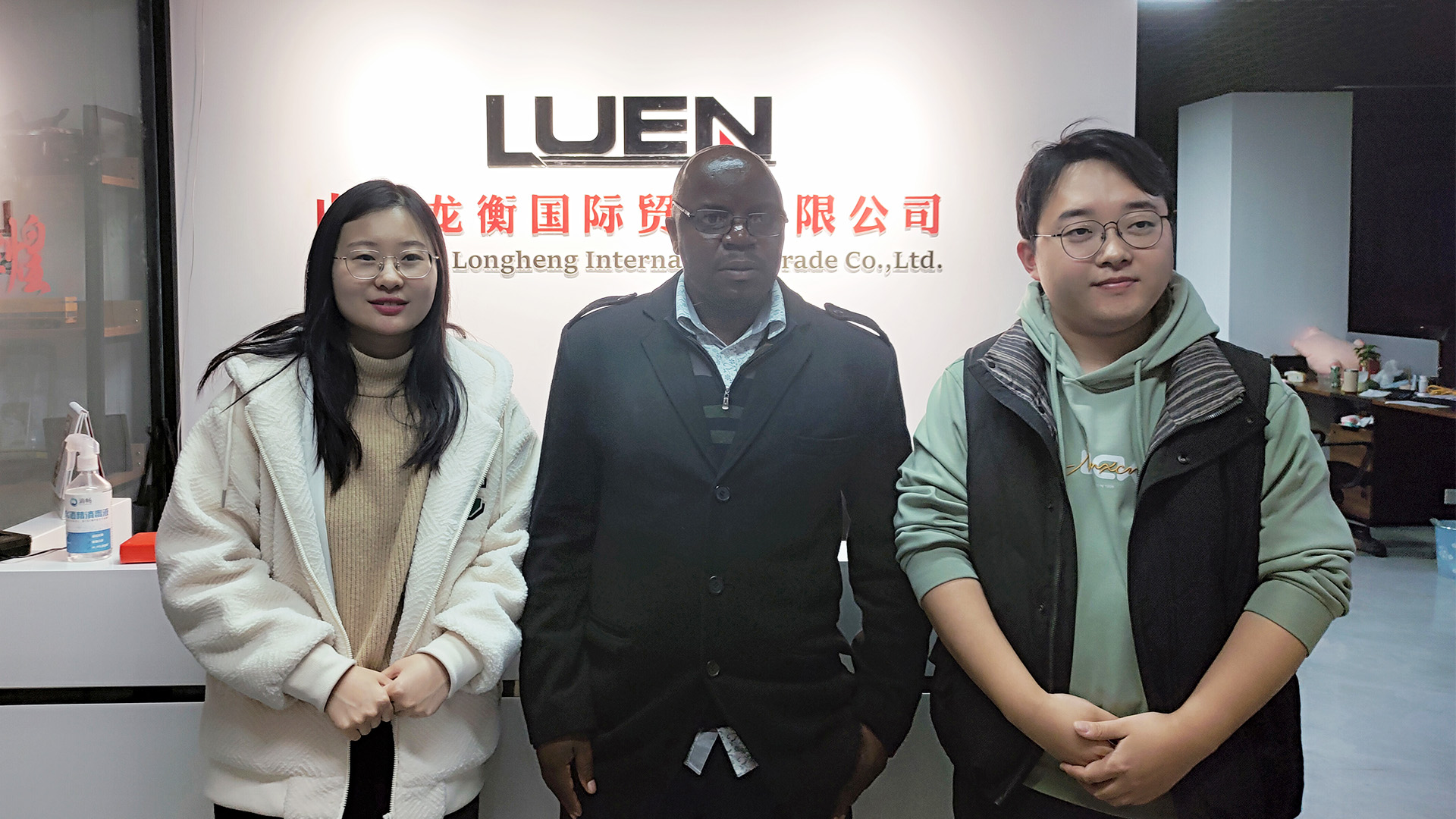
Factory-direct support starts with a named contact, not a general mailbox.
Have Questions or Need More Details?
Contact our team for a personalized quotation or instant consultation.
Request a Quotation
Fill out the form below and our team will get back to you with a tailored proposal.
WhatsApp Direct Chat
Prefer to chat in real-time? Message us on WhatsApp for instant assistance & quick answers.
- Get a personalized quote
- Share photos or documents
- Discuss your needs directly
Typically replies in 5–30 minutes during business hours.