
Tank Semi Trailer Technical Specs Decoded: Payload, Volume, and Material Options
A tank semi trailer's real payload is decided by three numbers that have to agree with each other: tank volume, cargo density, and the difference between the permitted gross vehicle weight (GVW) and the trailer's own tare weight. Luen Auto builds liquid tank trailers at 20,000–50,000 L with a 28,000–35,000 kg payload, and pneumatic dry bulk tankers at 32–60 m³ with a 25,000–35,000 kg payload. The shell material — Q345B carbon steel, 5083 aluminum alloy, or 304/316 stainless steel — is what decides whether those figures survive daily service.
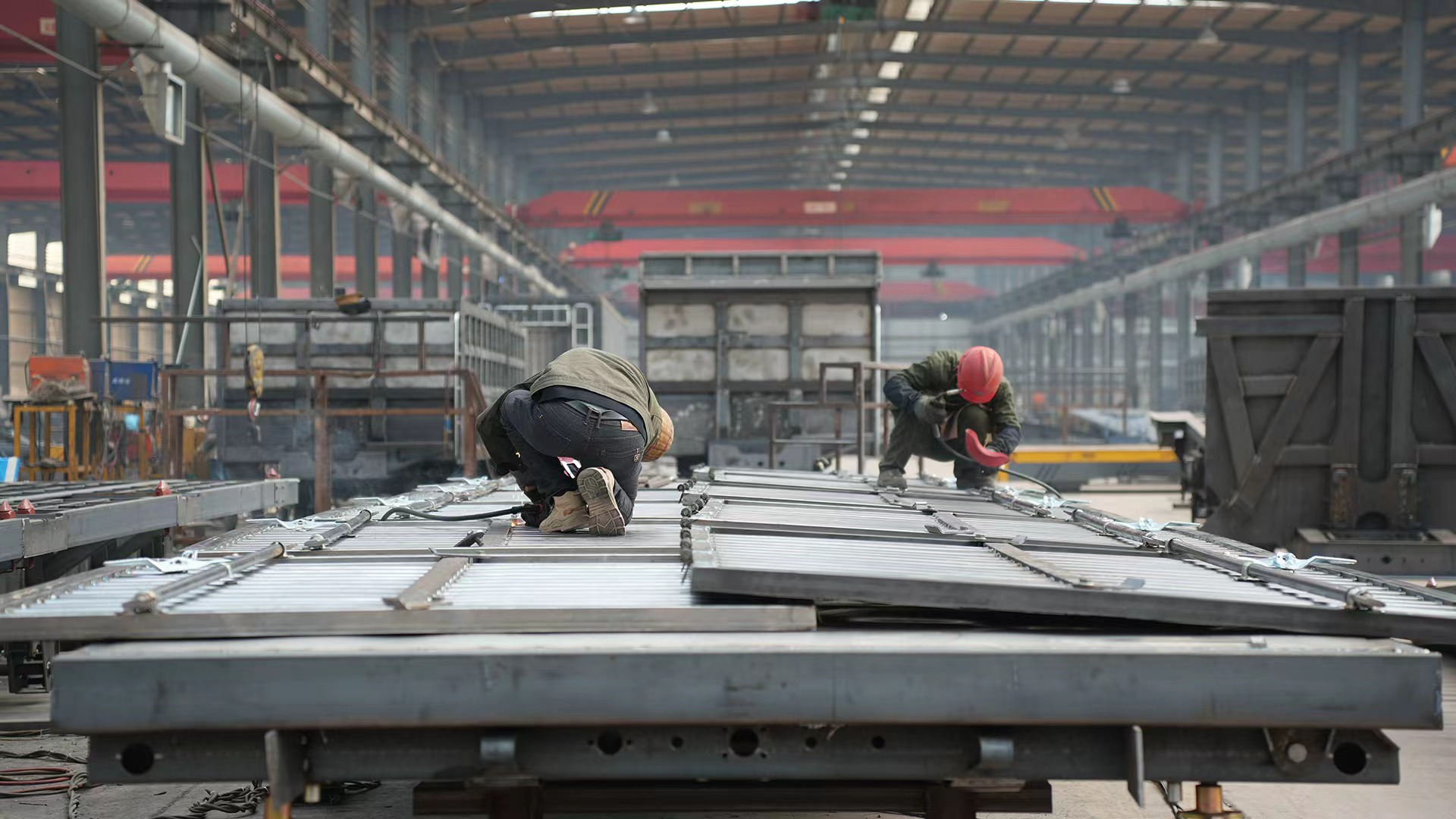
Shandong Luen Auto Co., Ltd. (trademark: LUEN AUTO) is a semi trailer and truck manufacturer and exporter based in Xuji Industrial Park, Liangshan County, Jining City, Shandong Province, China. The company operates a factory of over 50,000 m², produces around 1,500 units a year, and exports roughly 80% of its output to Africa, the Middle East, South America, Southeast Asia, Central Asia and Latin America.
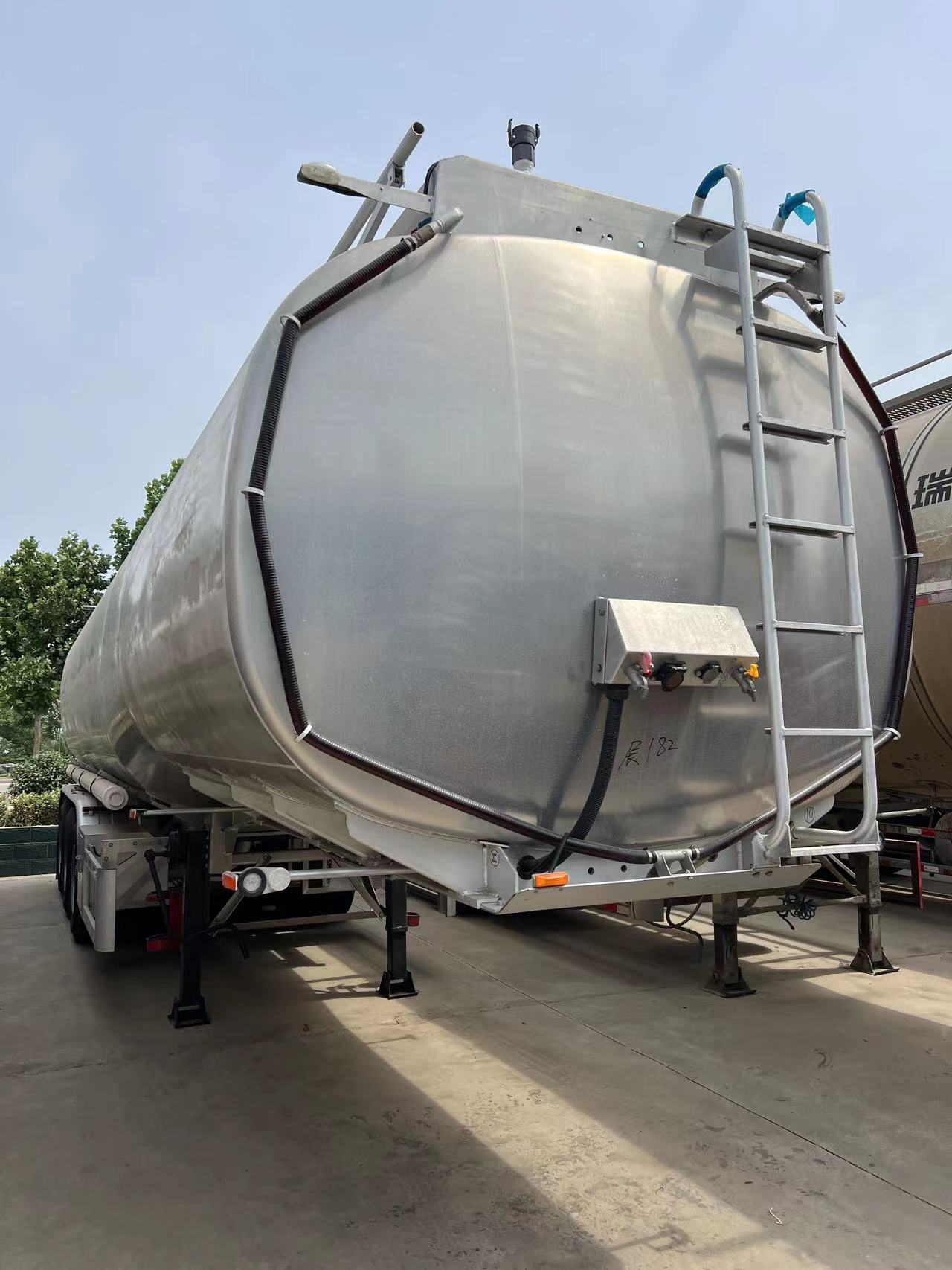
The Problem: A Tank Truck Trailer Has Two Capacities, Not One
Most sourcing mistakes in this category start with a single question — how many tons does it carry? A tank truck trailer actually publishes two capacities that can pull in opposite directions: a volume capacity expressed in litres, gallons or cubic metres, and a payload capacity expressed in kilograms. Whichever one is reached first becomes the real limit of the vehicle.
For a dense cargo such as bitumen or a heavy chemical liquid, the weight ceiling arrives long before the tank is full. On a Luen Auto liquid tank trailer, that ceiling is a payload of 28,000–35,000 kg inside a tank of 20,000–50,000 L. For a light powder such as fly ash or flour, the opposite happens: the shell fills first, and the working limit becomes the 32–60 m³ volume of a pneumatic dry bulk tanker, with payload published at 25,000–35,000 kg.
Both configurations sit on the same GVW band of 40,000–42,000 kg. Because that ceiling is fixed, every kilogram spent on tank shell, baffles, frame, discharge equipment and fittings is a kilogram that can no longer be sold as cargo. That single relationship is why tank material, wall thickness and discharge system selection are payload decisions — not cosmetic ones.
There is a compliance layer on top of the engineering layer. Transport of dangerous goods in fuel and tank trailers across Europe requires ADR certification under the ADR Agreement, and in the United States the Department of Transportation mandates annual safety inspections for trailers with a GVWR above 10,001 lbs under 49 CFR 396.17. A specification that cannot be documented is a specification a fleet cannot legally put to work.
Industry Background: Why Tank Specifications Carry More Risk Than Dry Freight
The global semi-trailer market was estimated at USD 22.8 billion in 2024, with expectations to reach USD 42.3 billion by 2033 (Grand View Research). Within that market, lowboy trailers accounted for the largest single share at 25.7% in 2024 (Grand View Research). Tank and bulk configurations sit at the specialised end of the same category, where a wrongly specified shell or discharge system cannot be corrected by adding a load strap.
The supply side has shifted as well. Sinotruk (CNHTC) dominated China's heavy-duty truck exports in 2024 with a record 135,000 units, while Shacman heavy-truck exports reached 25,000 units, a 35% year-on-year increase (ChinaTrucks.org; ChinaTruck.Net). Because a tank trailer only works as one half of a combination, fleet buyers typically plan the tractor unit and the trailer as a single specification package rather than two independent purchases.
What has not changed is the arithmetic that governs the vehicle. GVW limits are set by regulators, not by suppliers, so the competitive space for a manufacturer sits in tare weight control, material selection and discharge efficiency — exactly the three areas this article decodes.
Detailed Solution: How a Tank Semi Trailer Specification Is Actually Built
Luen Auto's tank range divides into three families, and each one answers a different version of the payload-versus-volume question.
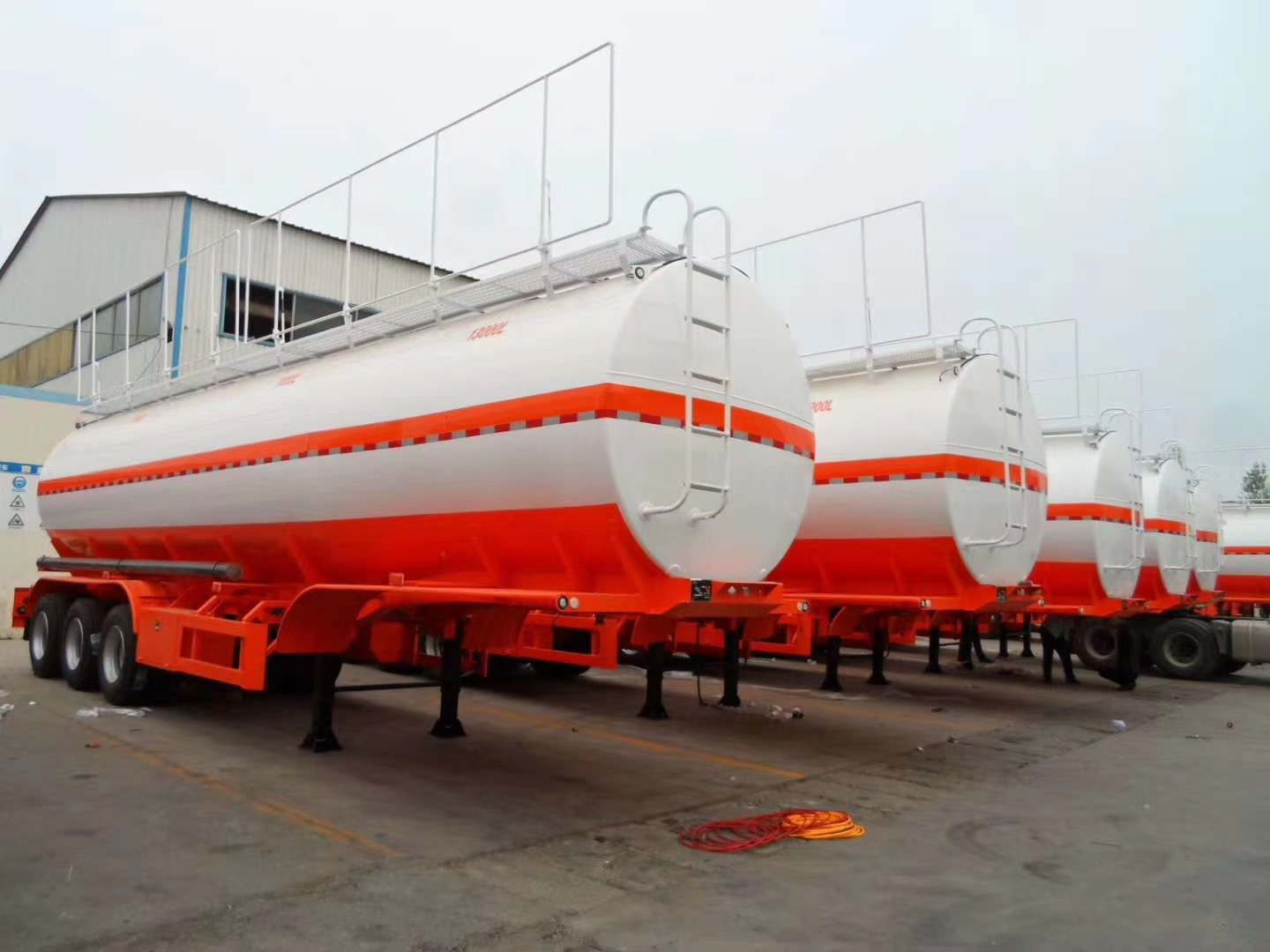
Liquid tank trailers — fuel, chemical, food-grade and bitumen
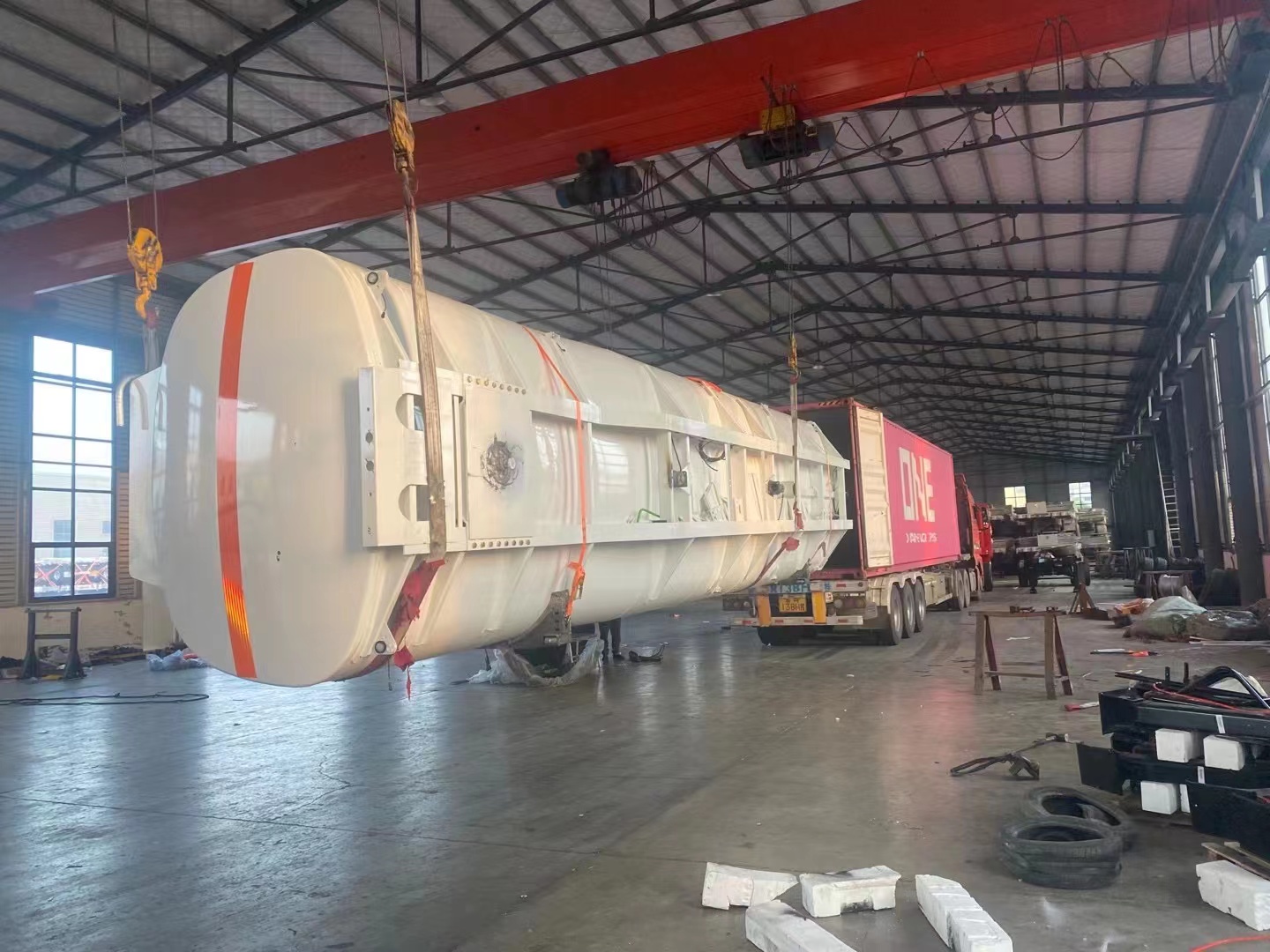
The liquid range covers single-compartment fuel tankers, multi-compartment fuel tankers with 3–6 bins, chemical liquid tankers, edible oil and food-grade tankers, water tankers and bitumen (asphalt) tankers, all built on a three-axle tank semi trailer platform. Published specifications are:
- Tank capacity: 20,000–50,000 L (5,000–13,000 gallons)
- Compartments: 1–6 bins
- Tank material: carbon steel (Q235B / Q345B); 304/316 stainless steel for food-grade or chemical-grade duty; 5083 aluminum alloy for a lightweight shell
- Tank thickness: 5–8 mm
- Axles: 3 × 13 t; GVW 40,000–42,000 kg; payload 28,000–35,000 kg
- Overall dimensions: length 11,000–12,500 mm, width 2,480–2,500 mm
- Discharge: bottom valve, pneumatic, or pump
- Anti-static provision: earthing reel and anti-static compartment separation
- Manhole: top DN500 manhole cover
- Safety equipment: emergency valve, pressure vent, rollover protection
Applications listed for this family are petroleum product distribution, oil and gas logistics, chemical liquid transport, food-grade liquid, water supply and bitumen road construction.
Dust tank trailers — pneumatic dry bulk and powder
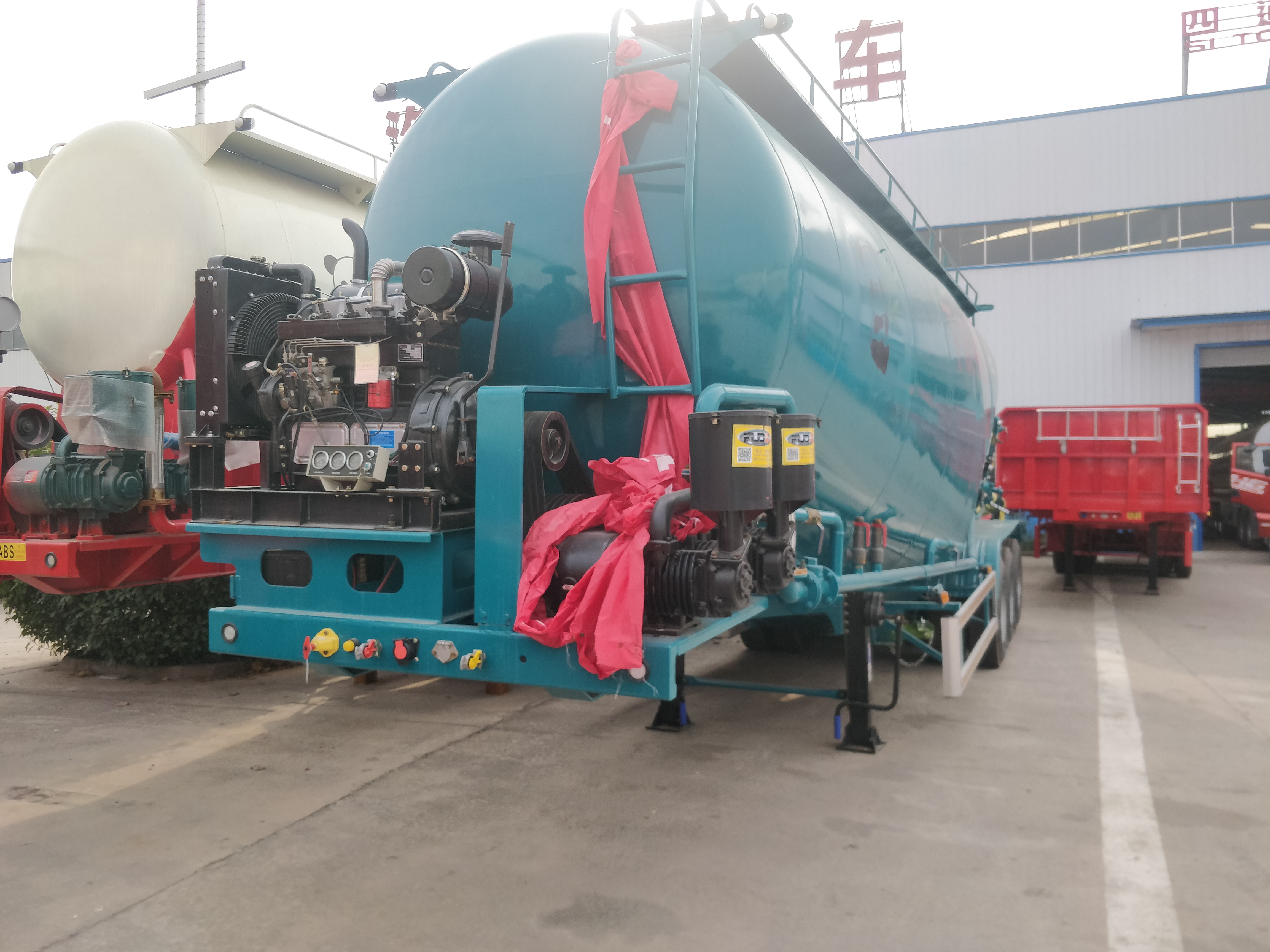
This family is sold under several names: powder tank semi trailer, bulk cement tanker trailer, pneumatic dry bulk trailer, cement bulker trailer — and dust tank trailer when the cargo is fine industrial dust. It replaces gravity discharge with compressed-air fluidisation, which is why its numbers look different from a liquid tanker.
- Tank volume: 32 / 40 / 45 / 50 / 60 m³
- Payload: 25,000–35,000 kg; GVW 40,000–42,000 kg; axles 3 × 13 t
- Tank material: Q345B carbon steel as standard; 5083 aluminum alloy as the lightweight variant
- Tank thickness: 4–6 mm
- Discharge system: pneumatic, using compressed-air fluidisation; V-type cone bottom or W-type multi-cone discharge
- Working pressure: 0.196–0.2 MPa (2 bar); test pressure 0.26 MPa (2.6 bar)
- Air compressor: PTO-driven or engine-mounted
- Discharge performance: 1.6 tons/min, approximately 35 minutes per 1,000 kg
- Discharge reach: vertical up to 15 m, horizontal up to 5 m
- Cargo particle size: ≤0.1 mm diameter materials
- Overall dimensions: length 11,000–12,500 mm, width 2,480–2,500 mm, height 3,900–4,200 mm
- King pin: 2" or 3.5"
Documented applications include cement manufacturing and distribution, construction material supply, power plant fly ash disposal, lime and chemical powder logistics, flour milling and grain processing, mineral powder (slag) haulage, and road and bridge construction.
CNG tank trailers — a pressure specification, not a volume specification
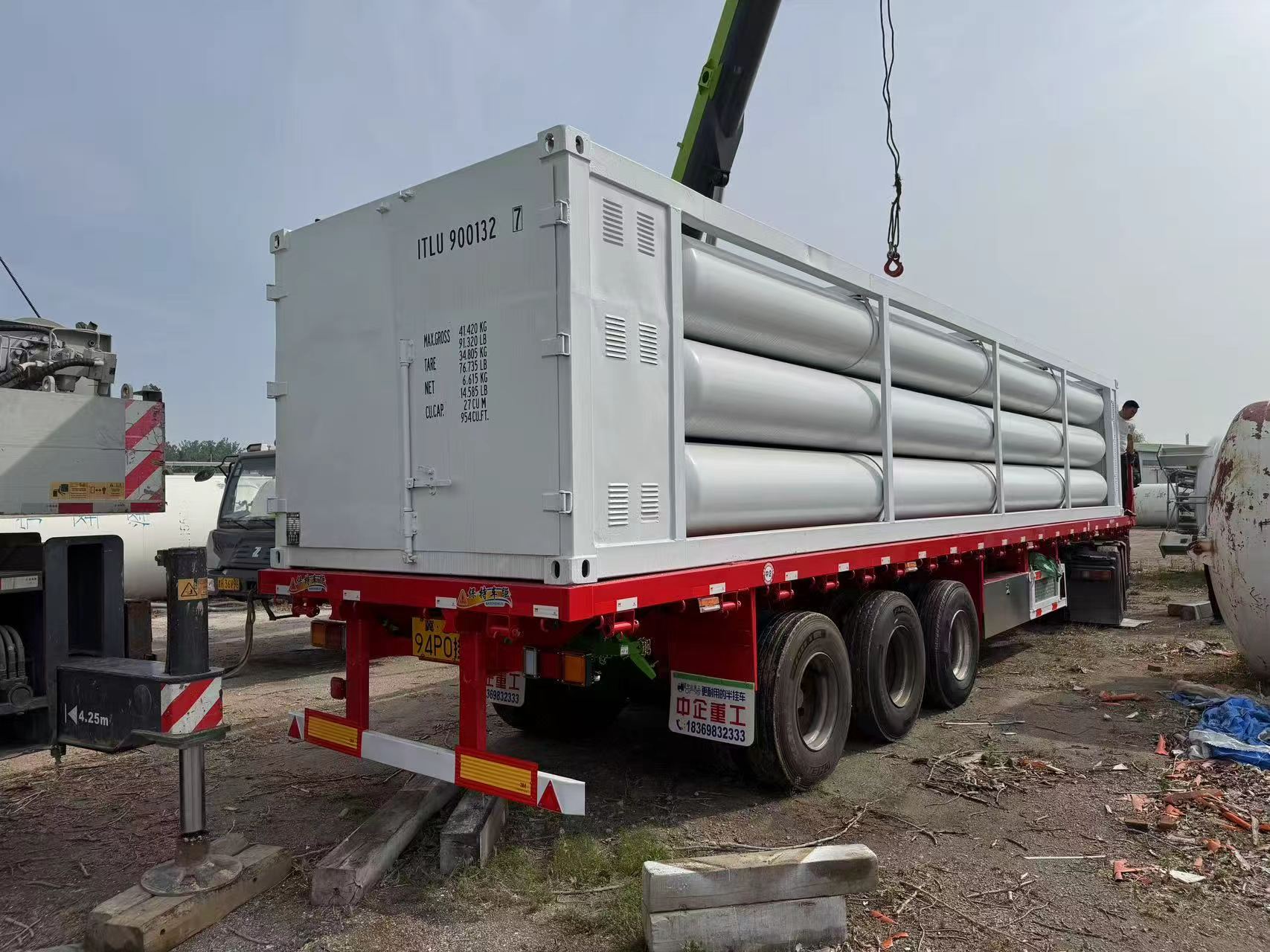
Compressed natural gas transport answers a different question again, because the payload is gas stored under pressure rather than a liquid or powder measured in cubic metres:
- Working pressure: 20–25 MPa (200–250 bar)
- Tube count: 8 / 10 / 12 / 16 / 20 tubes
- Tube diameter: 406–559 mm; tube length 6,000–12,000 mm
- Total water volume: 3,000–8,000 L; gas capacity 2,000–6,000 Nm³
- Cylinder material: 37Mn seamless steel or chrome-moly steel
- Safety equipment: pressure relief valve, emergency shutoff, earthing reel
- Axles: 3; GVW 40,000–42,000 kg; overall length 12,500–13,500 mm; width 2,480–2,500 mm
Listed applications are off-grid natural gas distribution, CNG mother-daughter station logistics, industrial gas supply, remote community gas and gas-fired power generation.
Material options: Q345B carbon steel versus 5083 aluminum alloy
Material choice is the lever that moves payload without touching the GVW ceiling. Q345B carbon steel is the baseline shell for both liquid and dry bulk tanks and is the specification most repair yards worldwide can work with. 5083 aluminum alloy is offered as the lightweight variant on both tank families, which releases part of the GVW envelope back to cargo — the practical reason a fuel distributor hauling long distances may choose it. Where the cargo itself is the constraint rather than the weight, 304/316 stainless steel is specified for food-grade and chemical-grade liquids because of its corrosion behaviour against the load.
Two limitations are worth stating plainly. Wall thickness is published per tank family — 5–8 mm for liquid tanks and 4–6 mm for dry bulk tanks — and thinner is not automatically better, because abrasion from mineral powders and pressure cycling both act on the shell. And material selection cannot be reversed later: a tank built for one cargo chemistry is not interchangeable with a tank built for another.
Verify the scope, not the logo
Certificates are where most tank trailer evaluations quietly go wrong, because a document is only meaningful within its stated scope. LUEN AUTO is a registered trademark in Mainland China, certificate number 86628573, issued by the China National Intellectual Property Administration under the Trademark Law of the People's Republic of China. On the management-system side, the company holds ISO 9001:2015 certification, certificate number 47424Q2464R0S, issued by ZHONGNUO CERTIFICATION CO., LTD. against GB/T 19001-2016 / ISO 9001:2015, covering the sales of semi trailer, semi trailer parts and tractor, issued 2024-10-09 and valid to 2027-10-08.
The company also holds a CE Certificate of Compliance numbered CPSC2106112201E, issued by CPStes under EU Directive (EU) 2015/863 and the IEC 62321 test series, valid for all EU member states and the EEA. That certificate names wheel lock model 201L1-A as the covered product. It is a useful proof point that the supplier can complete EU conformity work — but it does not certify a tank shell, and no buyer should read it as if it did.
Step-by-Step: Evaluating a Tank Semi Trailer Specification
The evaluation sequence below works in the order a real project does: cargo first, paperwork last.
- Start with the cargo, not the tank. Establish cargo density, chemical compatibility, and whether the material is a classified dangerous good. For pneumatic dry bulk loads, confirm particle size — the equipment is specified for ≤0.1 mm diameter materials.
- Identify which capacity binds. Heavy cargo means payload binds and 28,000–35,000 kg becomes the design ceiling. Light powder means volume binds and the 32–60 m³ tank range matters more than the weight figure.
- Do the GVW arithmetic yourself. GVW of 40,000–42,000 kg minus tare equals real payload. Ask for the tare figure against the exact shell material, thickness, compartment count and discharge equipment you have selected.
- Choose the shell material by chemistry and weight target. Q345B carbon steel for standard duty, 304/316 stainless steel where food-grade or aggressive chemical cargo demands it, 5083 aluminum alloy as the lightweight variant when payload needs to be protected.
- Match the discharge system to the receiving facility. Liquids use a bottom valve, pneumatic discharge or pump. Powders use compressed-air fluidisation with vertical reach up to 15 m and horizontal reach up to 5 m — check your silo height and unloading bay before ordering.
- Confirm running gear and safety equipment. Three axles at 13 t each, king pin 2" or 3.5", anti-static earthing reel and anti-static compartment separation, emergency valve, pressure vent and rollover protection.
- Verify documents against the actual build. Check the ISO 9001:2015 certificate scope, ADR compliance where the route requires it, and whether the vehicle is set up for annual DOT inspection under 49 CFR 396.17 in the United States.
- Fix commercial terms before signing. Luen Auto quotes from 1 unit for standard models, with flexible MOQ for trial orders and sample evaluation, and a 30–45 day lead time for standard configurations. Custom orders are quoted against specification complexity, and customisation can extend to overall dimensions, axle configuration, load rating, beam structure, suspension type, rim and tyre specification, landing gear, king pin, paint and coating, and branding or logo.
Use Cases: Matching the Configuration to the Job
- Fuel and petroleum distribution: liquid tank trailer with 1–6 compartments, anti-static compartment separation and earthing reel, at 20,000–50,000 L.
- Chemical liquid transport: 304/316 stainless steel shell for chemical-grade duty, with bottom valve, pneumatic or pump discharge.
- Edible oil and food-grade liquid: stainless steel construction to keep the cargo isolated from the shell.
- Water supply and bitumen for road construction: carbon steel liquid tanks, where corrosion risk is lower and payload capacity matters more than chemical inertness.
- Cement and dry bulk distribution: pneumatic powder tanker at 32–60 m³, discharging vertically up to 15 m into silos.
- Power plant fly ash, lime, mineral powder and flour milling: dry bulk configuration for ≤0.1 mm particle cargo, with 4–6 mm shell thickness.
- Off-grid gas distribution and CNG mother-daughter stations: CNG tube trailer with 8–20 tubes at 20–25 MPa working pressure.
These configurations are exported to Nigeria, Ghana, Tanzania, Kenya, Mozambique, Indonesia, the Philippines, Kazakhstan, Saudi Arabia, the UAE, Ecuador, Peru and Pakistan, among other markets.
Comparison Table: Liquid, Dry Bulk and CNG Tank Configurations
| Specification | Liquid tank trailer (fuel / chemical / food-grade) | Dust tank trailer (pneumatic dry bulk) | CNG tank trailer |
|---|---|---|---|
| Tank capacity | 20,000–50,000 L (5,000–13,000 gallons) | 32 / 40 / 45 / 50 / 60 m³ | 3,000–8,000 L total water volume; 2,000–6,000 Nm³ gas capacity |
| Payload | 28,000–35,000 kg | 25,000–35,000 kg | Not published as a kg payload; specified by gas capacity |
| GVW | 40,000–42,000 kg | 40,000–42,000 kg | 40,000–42,000 kg |
| Axles | 3 axle (13 t each) | 3 axle (13 t each) | 3 axle |
| Shell / cylinder material | Carbon steel Q235B / Q345B; 304/316 stainless steel; 5083 aluminum alloy | Q345B carbon steel standard; 5083 aluminum alloy lightweight variant | 37Mn seamless steel or chrome-moly steel cylinders |
| Wall thickness | 5–8 mm | 4–6 mm | Tube diameter 406–559 mm |
| Discharge / transfer | Bottom valve, pneumatic, or pump | Pneumatic fluidisation, 1.6 tons/min, ~35 min per 1,000 kg | Pressure transfer at 20–25 MPa working pressure |
| Working pressure | Not applicable | 0.196–0.2 MPa (2 bar); test 0.26 MPa (2.6 bar) | 20–25 MPa (200–250 bar) |
| Overall length | 11,000–12,500 mm | 11,000–12,500 mm | 12,500–13,500 mm |
| Overall width | 2,480–2,500 mm | 2,480–2,500 mm | 2,480–2,500 mm |
| Key safety features | Emergency valve, pressure vent, rollover protection, anti-static earthing reel, DN500 top manhole | Pneumatic pressure control, V-type cone or W-type multi-cone discharge | Pressure relief valve, emergency shutoff, earthing reel |
Material Selection Table: Which Shell Fits Which Cargo
| Shell option | Where it is specified | Typical cargo | Trade-off to weigh |
|---|---|---|---|
| Q345B carbon steel | Standard build on liquid and dry bulk tanks | Fuel, bitumen, water, cement, fly ash, lime, mineral powder | Conventional, widely repairable shell; heavier than an aluminum equivalent, so less GVW remains for cargo |
| 5083 aluminum alloy | Lightweight variant on liquid and dry bulk tanks | Fuel, chemicals and powders on routes where payload matters | Reduces shell weight to protect payload; requires repair capability appropriate to the material |
| 304/316 stainless steel | Food-grade and chemical-grade liquid tanks | Edible oil, food liquids, aggressive chemicals | Corrosion resistance for sensitive cargo; specified where cargo contamination risk outweighs weight |
Note on the numbers: all figures above are the published configuration ranges for these product families. Your actual payload depends on the exact specification you order, because compartment count, shell material, wall thickness, discharge equipment and running gear all change tare weight inside the same 40,000–42,000 kg GVW band.
FAQ: Tank Semi Trailer Specifications, Compliance and Ordering
Are Chinese tank semi trailer manufacturers CE certified, and what should I actually check?
CE marking is product-specific, not company-wide, so the useful check is the certificate's named product. Luen Auto holds a CE Certificate of Compliance numbered CPSC2106112201E, issued by CPStes under EU Directive (EU) 2015/863 and the IEC 62321 test series, valid across all EU member states and the EEA — that certificate names wheel lock model 201L1-A as the covered product. For the trailer business, the verified management-system document is ISO 9001:2015 certificate 47424Q2464R0S, issued by ZHONGNUO CERTIFICATION CO., LTD. against GB/T 19001-2016 / ISO 9001:2015, covering the sales of semi trailer, semi trailer parts and tractor. If your route involves Europe, ADR requirements apply to dangerous goods in fuel and tank trailers; in the United States, annual safety inspections are mandated under 49 CFR 396.17 for trailers above 10,001 lbs GVWR. Ask for certificate number, named product and scope before you accept a logo as proof.
What payload and volume can a tank semi trailer be built to?
Liquid tank trailers are published at 20,000–50,000 L with 1–6 compartments, a payload of 28,000–35,000 kg, a GVW of 40,000–42,000 kg and three axles at 13 t each. Pneumatic dry bulk tankers are published at 32, 40, 45, 50 or 60 m³ with a payload of 25,000–35,000 kg on the same three-axle, 40,000–42,000 kg GVW platform. CNG tube trailers are specified differently, with 8 to 20 tubes, 3,000–8,000 L total water volume and 2,000–6,000 Nm³ gas capacity at a working pressure of 20–25 MPa.
What drives the cost of a tank semi trailer?
The published cost drivers are specification variables rather than brand labels: shell material (Q345B carbon steel, 5083 aluminum alloy or 304/316 stainless steel), wall thickness (5–8 mm on liquid tanks, 4–6 mm on dry bulk tanks), number of compartments (1–6), discharge system (bottom valve, pneumatic or pump for liquids; compressed-air fluidisation with a PTO-driven or engine-mounted compressor for powders), axle and suspension configuration, and the depth of customisation across dimensions, load rating, beam structure, rim and tyre specification, landing gear, king pin, paint and branding. Each of those choices changes tare weight, and tare weight changes how much of the GVW is available to sell as cargo.
Can I order a single tank trailer as a sample before committing to a fleet order?
Yes. The minimum order quantity is 1 unit for standard models, with flexible MOQ for trial orders and sample evaluation. Every unit is subject to 100% factory inspection before shipment, supported by in-house testing equipment for load testing, brake performance testing and dimensional verification.
What is the lead time, and how do I start a specification?
Lead time is 30–45 days for standard configurations; custom orders are quoted according to specification complexity. To start, send your cargo type, required volume or payload, and discharge requirement — the team will return a configuration with tare weight, GVW margin and lead time. You can review the full product range in the LUEN Auto Product Catalog, or contact William Lee at luengroup@lhaxle.com / WhatsApp +86 17686798823.
Conclusion: Decode the Spec Before You Compare the Price
A tank semi trailer specification reads as a list of numbers, but only three of them decide the outcome. The first is whether volume or payload binds for your cargo — 20,000–50,000 L and 28,000–35,000 kg on a liquid tanker behaves very differently from 32–60 m³ and 25,000–35,000 kg on a pneumatic dry bulk tanker. The second is which shell material you choose between Q345B carbon steel, 5083 aluminum alloy and 304/316 stainless steel, because that choice moves tare weight and corrosion behaviour at the same time. The third is documentation: an ISO 9001:2015 certificate with a stated scope, ADR compliance where your route demands it, and a clear understanding of what each certificate does and does not cover.
Get those three right and every later comparison — axle count, discharge system, compartment split, paint specification — becomes a straightforward engineering conversation instead of a guess.
Next Step: Request a Tank Semi Trailer Specification
Send your cargo type, target volume and discharge requirement, and Luen Auto will return a configuration with tare weight, GVW margin, lead time and documentation pack.
Download the LUEN Auto Product Catalog (PDF) · www.luen-trailertruck.com · WhatsApp +86 17686798823
Have Questions or Need More Details?
Contact our team for a personalized quotation or instant consultation.
Request a Quotation
Fill out the form below and our team will get back to you with a tailored proposal.
WhatsApp Direct Chat
Prefer to chat in real-time? Message us on WhatsApp for instant assistance & quick answers.
- Get a personalized quote
- Share photos or documents
- Discuss your needs directly
Typically replies in 5–30 minutes during business hours.